
In the southern area of Khanh Hoa Province, there are many Cham temples that hold significant cultural, historical and spiritual value for the local people. However, the exploitation and promotion of these Cham monuments for tourism activities need to be improved.
Ancient temples
The southern part of the province is home to numerous distinctive temples with diverse architectural features of Cham people. Noteworthy sites include special national monument Po Klong Garai Temple (Do Vinh Ward), special national monument Hoa Lai Temple (in Thuan Bac Commune), and national monument Po Rome Temple (in Phuoc Huu Commune). According to records, Po Klong Garai Temple was constructed under the reign of King Jaya Simhavarman III to worship Po Klong Garai—a king highly revered by Cham people for his merits in fighting foreign invaders, digging canals and building dams to fertilize the fields. The temple is believed to be built between the late 13th and early 14th centuries.
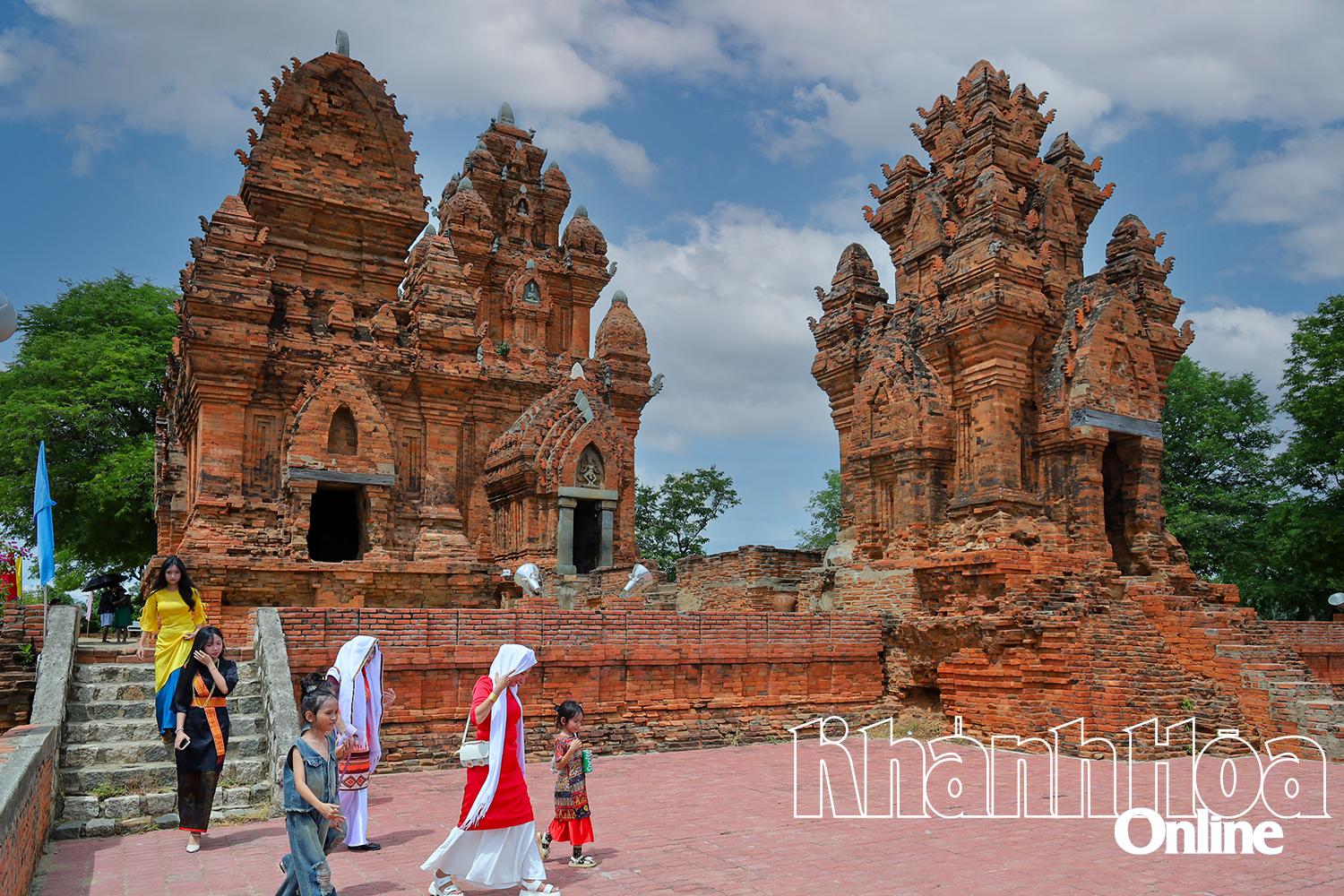 |
| Special national monument Po Klong Garai Temple |
Hoa Lai Temple (also known as Ba Thap) was built around the 8th to 9th centuries. This is an architectural complex that originally consisted of three main towers: the Southern Tower, the Central Tower (which collapsed in the early 20th century and only the foundation remains), and the Northern Tower. According to researchers, while there were different opinions about Hoa Lai Temple in the past, archaeological excavations and inscriptions have confirmed Cham people as its builders. Hoa Lai Temple is a complex of towers and shrines worshipping the gods Shiva and Vishnu. Besides Cham culture, Hoa Lai Temple also bears the hallmarks of Indian, Khmer, and Javanese art and cultures.
Po Rome Temple is identified as the last brick temple built by Cham people, built in the 17th century to worship King Po Rome, a monarch who significantly contributed to the economic, cultural and spiritual development of Cham ethnic group. King Po Rome reigned from 1627 to 1651 and is regarded to make great contributions to the development of Cham writing, national harmony and religious unity and introduction of irrigation techniques for agricultural production.
Value that need to be promoted
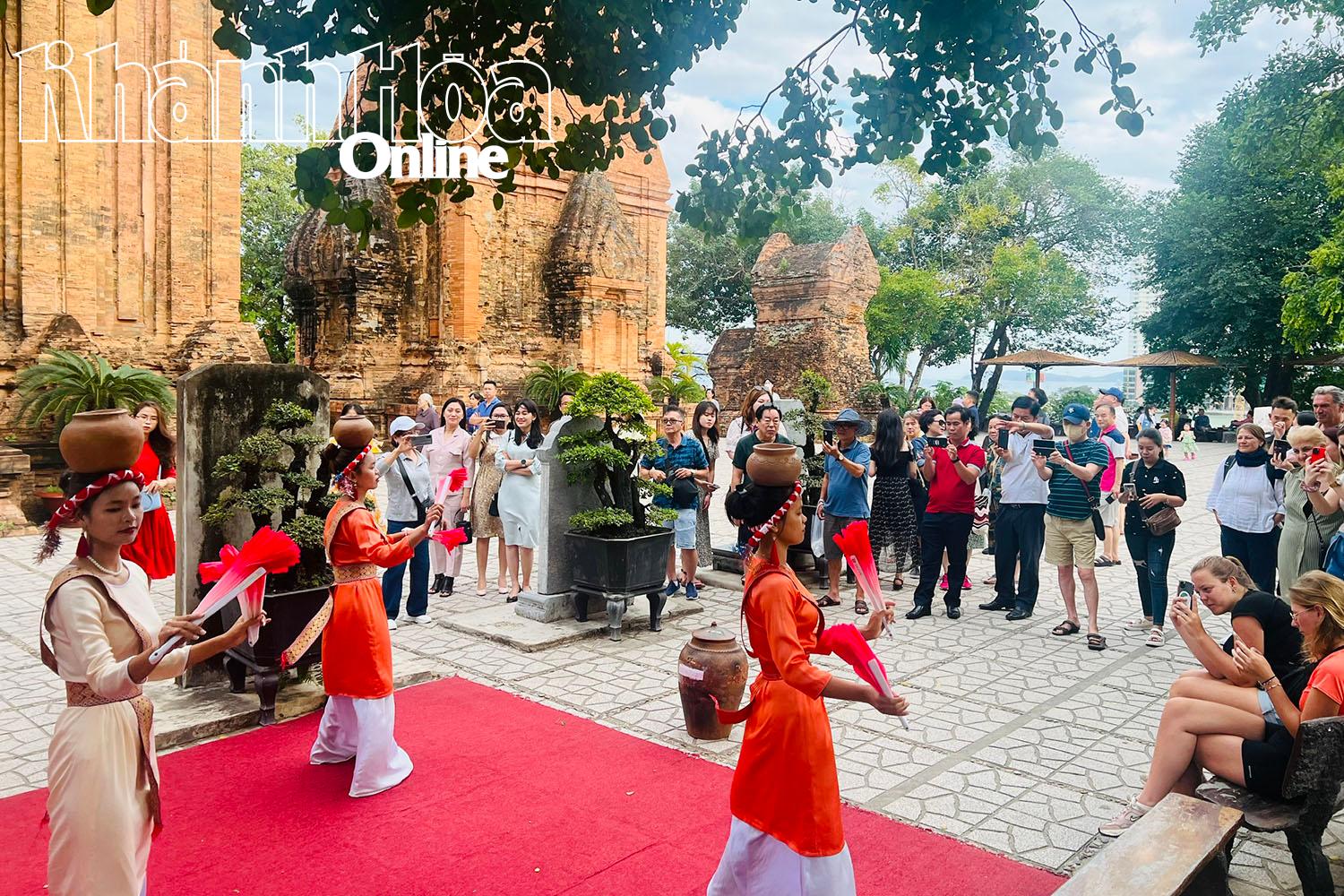 |
| Cham dance performances at national special monument Po Nagar Temple (Photo: XUAN THANH) |
Among the three mentioned Cham temples, Po Klong Garai Temple has been successfully opened for tourism, serving both local residents and visitors. Since the beginning of the year, Po Klong Garai Tower has received over 230,000 paid visitors of all ages. However, some structures within the temple complex are showing signs of degradation. Hoa Lai Temple and Po Rome Temple have not yet implemented services for tourists.
Regarding tourism services at Po Klong Garai Temple, on October 1, Khanh Hoa Provincial Department of Culture, Sports and Tourism issued a document asking Khanh Hoa Provincial Cultural Heritage Preservation Center to report on the advantages and difficulties in deploying electric buggy service for transporting tourists within the temple; to erect souvenir stalls to ensure visitors can easily tour the site, access information and shop.
According to popular opinions, in order to promote the value of Cham temples, it needs to encourage local people and tourists to join hands in protecting the monuments and to prevent any damage to the monuments. Acts of damaging the monuments must be strictly punished. Furthermore, it is necessary to intensify the promotion of Cham temples’ value to international tourists through bilingual content (Vietnamese-English) and other common languages, utilizing different modern methods and media; organize cultural events and activities relating to the monuments; attract visitors with diverse tourism products. In addition, there is a need for cooperation among provinces and cities that possess Cham cultural heritages in preserving and promoting the value of Cham temples. It also needs preparation for necessary documentation for Cham temples to be organized as world cultural heritages.
GIANG DINH
Translated by H.N







Thông tin bạn đọc
Đóng Lưu thông tin