
Preliminary results from the 2026 Economic Census indicate that Khanh Hoa Province's economy continues to shift towards service and industry. Notably, the business sector has shown a clear recovery, with significant growth in both the number of enterprises and revenue. However, small and micro-enterprises still account for a large proportion, posing specific challenges for future policy planning regarding business development and the provincial economy as a whole.
Economic shift towards services and industry
2026 marked the seventh nationwide Economic Census, conducted to gather data on the production and business activities of economic establishments. Preliminary results for Khanh Hoa Province show that, as of December 31, 2025, the province comprised 123,360 units - spanning economic, administrative, and public service sectors, as well as associations and religious or belief-based establishments - employing a total workforce of 473,124. Economic units accounted for 97.59% of the total units and 80% of the total workforce, maintaining their leading role in the economy. Between 2016 and 2025, the number of production and business establishments steadily increased, particularly during the 2020-2025 period. The structural composition of these establishments reflects a shift characterized by the expansion of the economic sector, the streamlining of the administrative sector, and sustained growth in the service sector. Notably, individual non-agricultural, non-forestry, and non-fishery business establishments accounted for 87.87% of all economic units yet employed only 43.91% of the workforce. Thus, while the individual business sector remains vast and plays a vital role in trade, services, production, and employment generation, it consists primarily of small-scale household businesses. Conversely, enterprises account for only 11.81% of all business units yet employ 55.42% of the total workforce. This highlights the prominent role enterprises play in organizing production and generating employment.
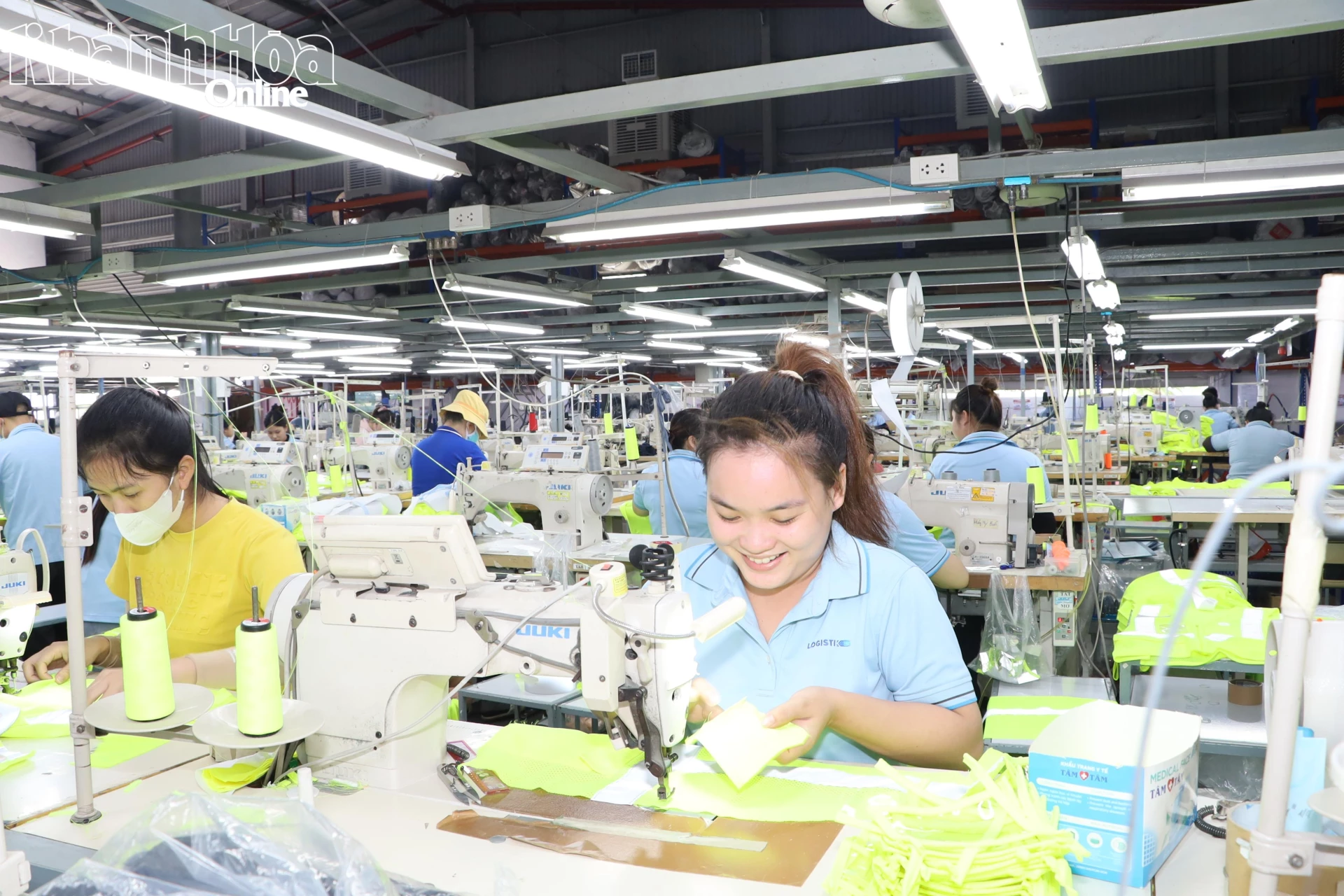 |
| Production at Logistik Unicorp Co., Ltd. (Dien Phu Industrial Cluster, Dien Dien Commune) |
In terms of economic sectors, the service sector dominates, accounting for 86.07% of all units and 72.06% of the workforce, while industry and construction make up 13.38% of units and 26.73% of the workforce. The agriculture, forestry, and fishery sector accounts for just 0.55% of units and 1.21% of the workforce. Economic activity is concentrated primarily in Nha Trang, Cam Lam, Ninh Hoa, and Phan Rang - areas that benefit from advantages in infrastructure, transportation, services, and investment attraction. In contrast, mountainous, remote, and isolated communes show smaller scales in terms of both the number of units and the workforce.
Overall, Khanh Hoa's economy is shifting more distinctly toward service and industry; enterprises are playing an increasingly significant role in employment, while the individual business sector remains dominant in terms of the sheer number of establishments.
Rapid growth in the number of enterprises
The enterprise sector stands out as a notable highlight in the results of the Economic Census. As of December 31, 2025, Khanh Hoa had 14,212 active enterprises with recorded production and business results. This figure represents 1.7% of the national total, marking a 1.9% increase compared to 2024 and a 34.1% rise - an addition of 3,613 enterprises - since 2020. On average, the province sees an annual increase of 723 enterprises, reflecting a growth rate of approximately 6% per year. The increase in the number of enterprises indicates the sector's capacity for recovery and the expansion of production and business activities. However, the growth rate of enterprises outpaced that of the workforce. During the 2020-2025 period, the workforce grew by 21.76%, a rate 12.33 percentage points lower than the growth rate of the number of enterprises. Consequently, the average workforce per enterprise declined from approximately 16.3 employees in 2020 to 14.8 employees in 2025. These figures accurately reflect the reality that 95.4% of the province's enterprises are micro or small-sized. While this group benefits from flexibility, rapid adaptability, and ease of market entry, it simultaneously faces limitations regarding capital, technology, management capacity, and competitiveness.
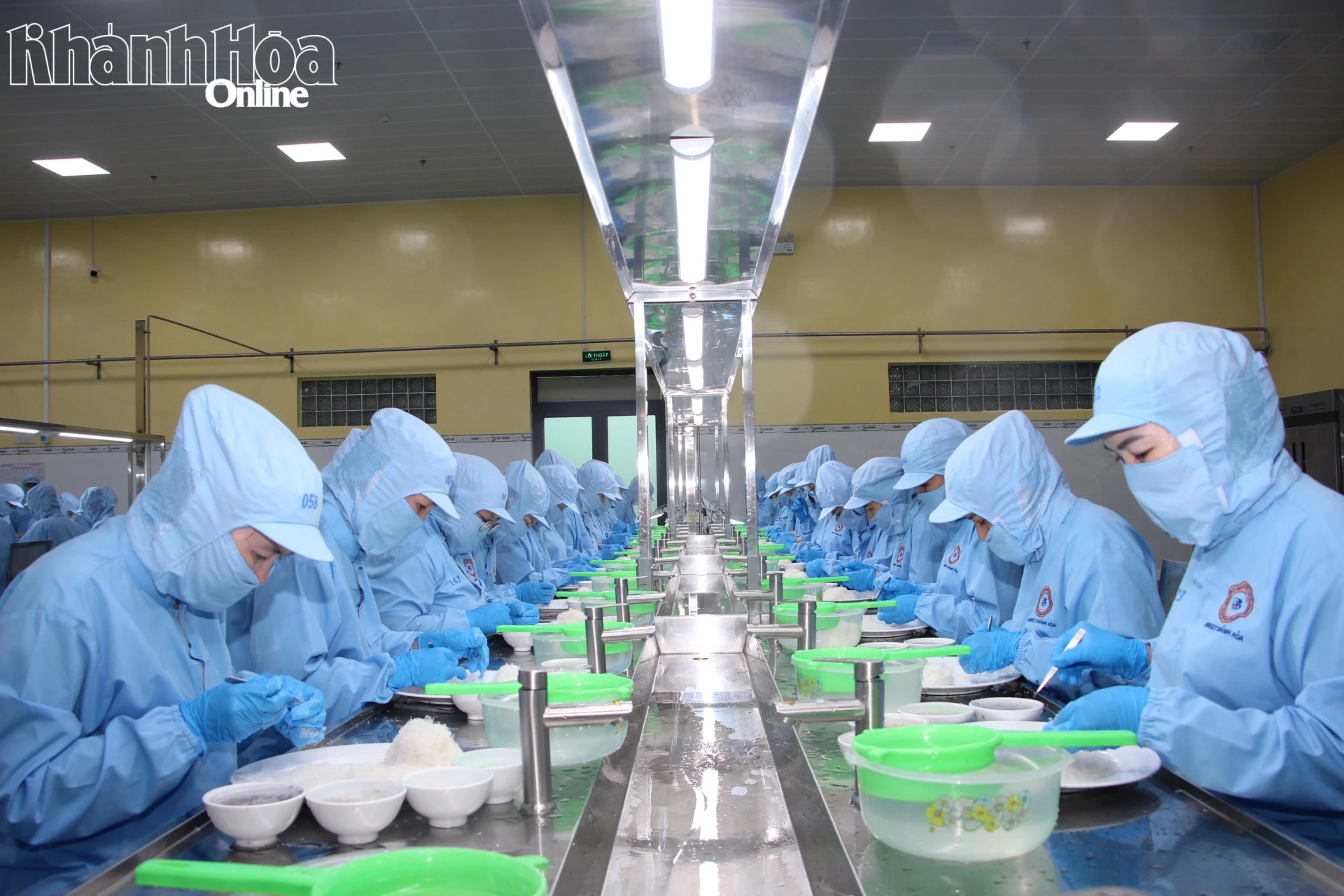 |
| Production at Khanh Hoa Salanganes Nest Company |
The 2020-2025 period also saw robust growth in enterprise capital, concentrated primarily among large enterprises and the non-state sector; conversely, while small and micro enterprises account for the majority of the total number of firms, they hold only a small fraction of the total capital. In 2025, the total net revenue of active enterprises with reported production and business results reached over VND 351.6 trillion, an increase of nearly VND 148.16 trillion, or 72.81%, compared to 2020. This strong revenue growth demonstrates the recovery and expansion of the enterprise sector. However, the fact that revenue growth lagged behind capital growth suggests there is still room to improve the efficiency of capital utilization.
Le Thi Truc Phuong, Head of the Provincial Statistics Office, noted that the business sector is growing in both number and scale, with the private sector continuing to play a leading role. However, production resources, including labor, capital, and revenue, remain concentrated among a small percentage of large enterprises. This reality underscores the need to continue supporting small and medium-sized enterprises (SMEs) in accessing capital, innovating technology, enhancing productivity and management efficiency, and expanding markets, while simultaneously fostering linkages between small and large enterprises to facilitate deeper integration into value chains. In addition to data on enterprises, the General Census provides information on cooperatives and individual business establishments operating outside the agriculture, forestry, and fishery sectors. This serves as a vital information source, enabling the province to accurately assess the economic landscape, formulate appropriate policies, and drive sustainable growth in the coming time.
Mai Hoang
Translated by T.T





Thông tin bạn đọc
Đóng Lưu thông tin