
Cashless payment is becoming increasingly popular for purchasing goods, using services, and conducting essential transactions. This trend contributes to driving digital transformation and the development of digital commerce within the province.
With just a smartphone equipped with a banking app and an internet connection, residents can easily perform many transactions that previously required visiting a payment counter and paying with cash. Methods such as QR code scanning, internet banking, mobile banking, and e-wallets are increasingly preferred for shopping, dining, booking tickets, paying bills, and accessing various services.
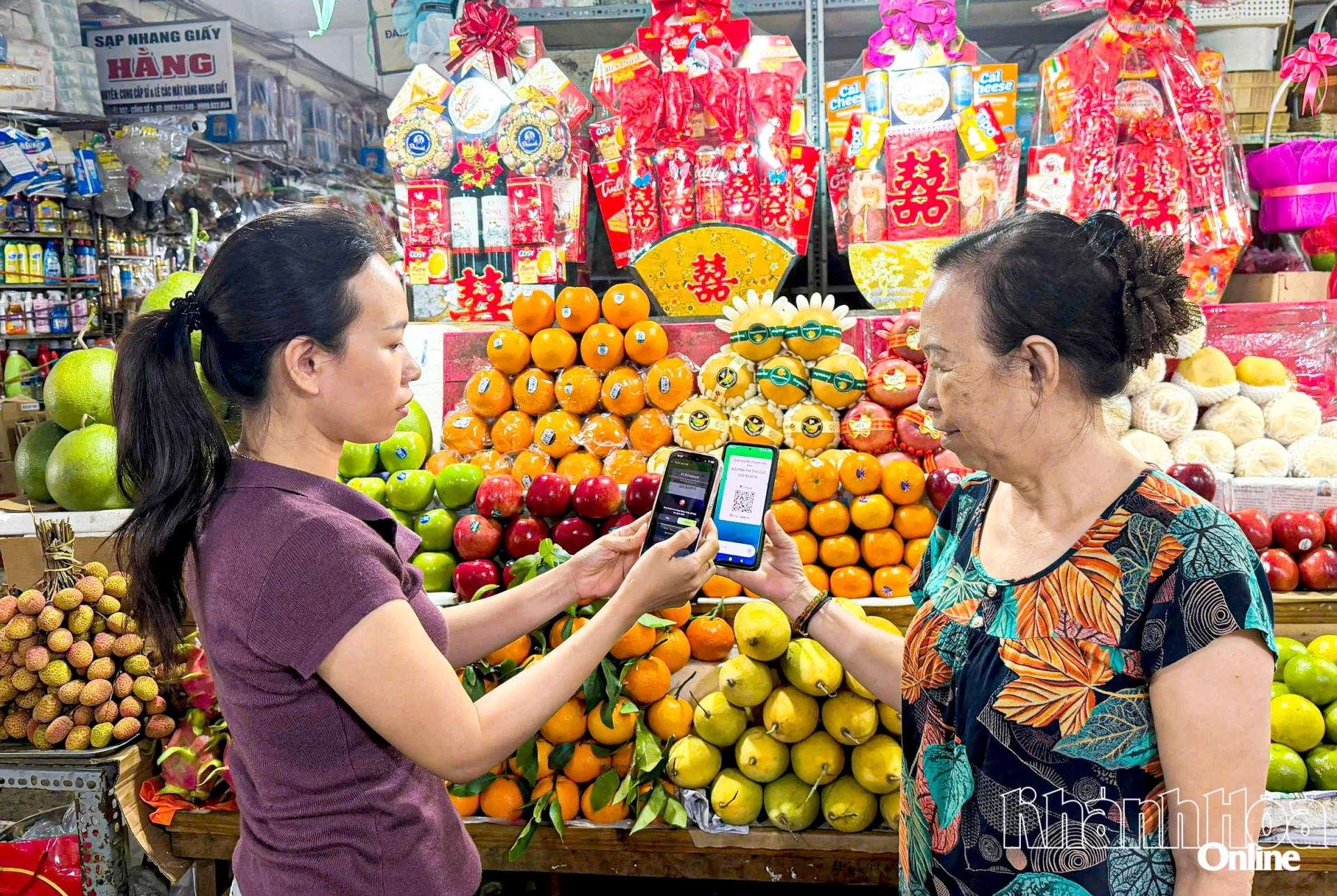 |
| Shoppers scan QR codes to make payment at Phan Rang Market (Phan Rang Ward). |
At Co.opmart Thanh Ha Supermarket (Phan Rang Ward), there are approximately 1,200 to 1,300 customer visits daily, with about 70% opting for cashless payment. According to a supermarket representative, this rate increases by over 10% annually. Customers can currently pay via various methods, including QR code scanning, e-wallets (MoMo, ZaloPay), bank cards, or bank transfers. The supermarket has also launched an online shopping channel, allowing customers to place orders and make payments remotely to meet increasingly diverse shopping needs.
QR codes are appearing more frequently at traditional markets, grocery stores, coffee shops, and eateries. Buyers can scan the codes to pay, while sellers can easily verify incoming payments directly on their phones. Nguyen Hoang Giang (Tay Nha Trang Ward) shared that he used to rely on bank transfers primarily for large sums. Now, however, he chooses to scan QR codes for payment even when buying low-value items, provided the vendor offers the option. This allows him to avoid carrying large amounts of cash and enables him to review his spending via transaction history whenever necessary. Nguyen Phuong Tram, owner of Lucky Tea & Coffee (Nha Trang Ward), noted that a QR code is placed right at the counter for customers to make payments after ordering drinks. This method saves time while also minimizing risks associated with handling cash.
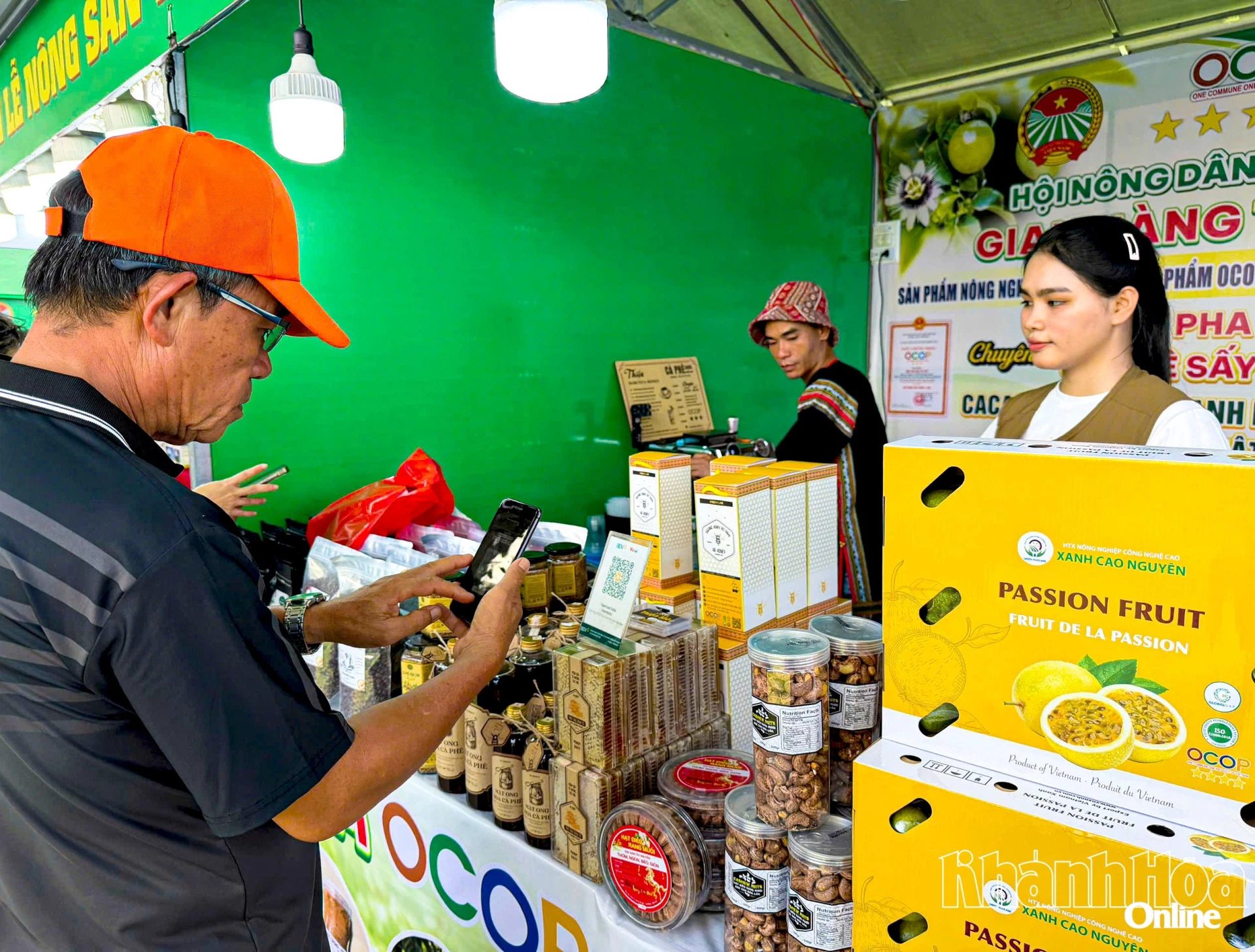 |
| A customer scans QR code to make a payment at the 2026 Khanh Hoa Province Agricultural Produce and OCOP Product Week. |
Cashless payment has also proven highly effective for settling payments for essential services. Currently, Khanh Hoa Power Joint Stock Company manages and supplies electricity to over 456,000 customers. The company has partnered with 18 banks and payment intermediaries to roll out various electronic transaction channels. To date, 100% of the company's customers pay their electricity bills via cashless methods, such as bank transfers or e-wallets, using intermediaries like Viettel, Payoo, VNPAY, and ShopeePay. This diversity of payment channels allows customers to settle their bills proactively anytime and anywhere, reducing travel time and minimizing late payments. Nguyen Trung Hieu, Head of the Business Department at Khanh Hoa Power Joint Stock Company, stated that the company plans to continue collaborating with banks, payment intermediaries, and collection agents to raise awareness and guide customers in using electronic payment channels. Maintaining cashless payment options not only offers convenience to customers but also contributes to improved service quality and the application of digital technology in electricity business operations.
Furthermore, cashless payment options are being expanded to include trade fairs and trade promotion events. Adopting electronic payments offers greater transaction convenience for businesses, cooperatives, and production facilities, reducing the need for cash counting and management while allowing them to gradually familiarize themselves with digital technology.
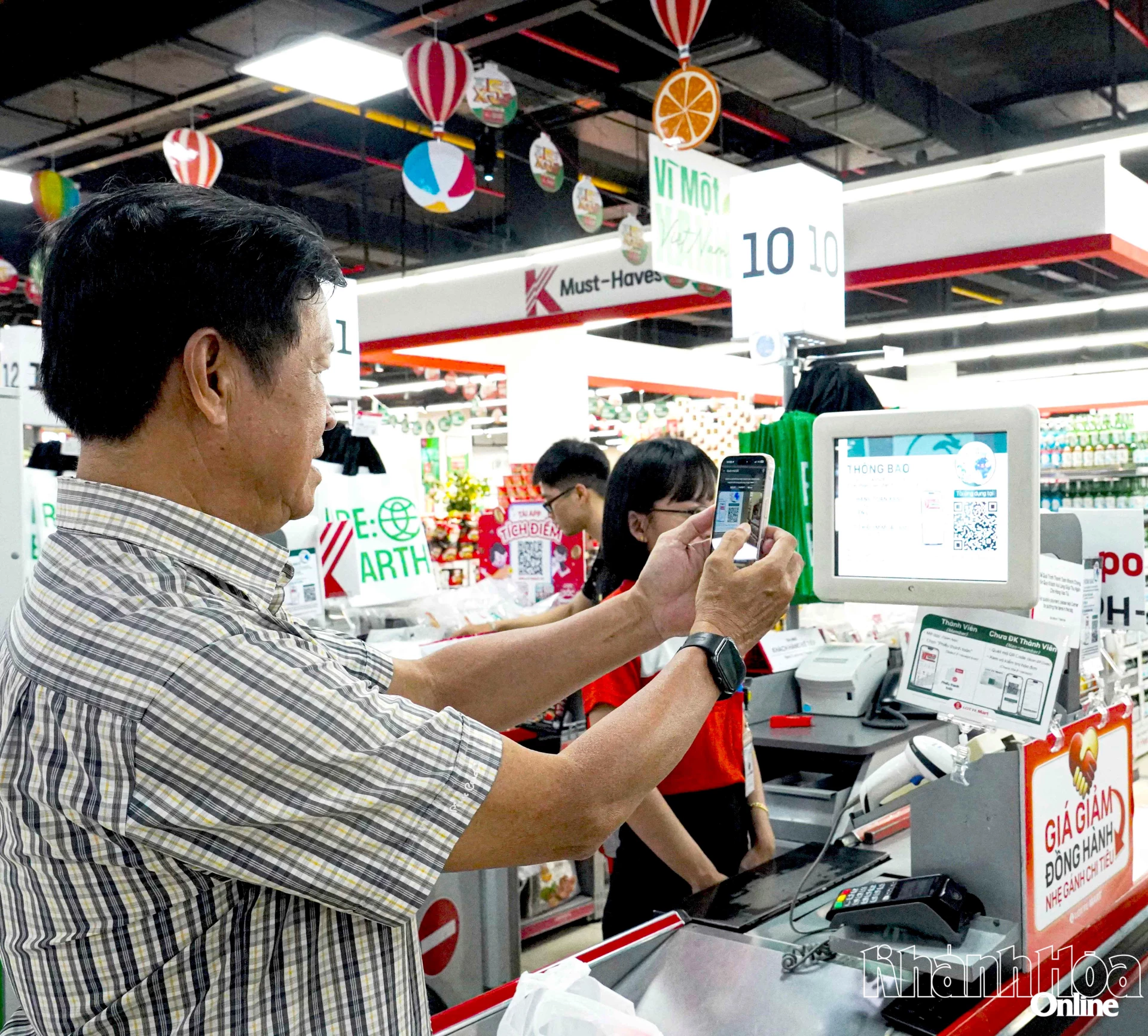 |
| A customer scans QR code to make a payment at Lotte Mart (Tay Nha Trang Ward). |
According to Tran Quoc Sanh, Deputy Director of the Department of Industry and Trade, cashless payment methods are increasingly being adopted by the public, enterprises, and business establishments, ranging from modern retail chains to traditional markets, shops, and small-scale vendors. In the coming time, the industry and trade sector will continue to raise awareness and encourage businesses, cooperatives, and individual business households to implement electronic payment methods. Efforts will also focus on promoting cashless payments during trade promotion activities, fairs, and supply-demand connection events, thereby fostering the development of e-commerce and digital commerce within the province.
Hong Nguyet
Translated by T.T





Thông tin bạn đọc
Đóng Lưu thông tin