
The rapid socio-economic development, including the expansion of tourism in recent years, has led to an alarming increase in waste, specially plastic pollution, that threatens the marine environment. Therefore, it is essential for the entire political system, the business community and individuals alike to work together in a united effort to preserve our seas.
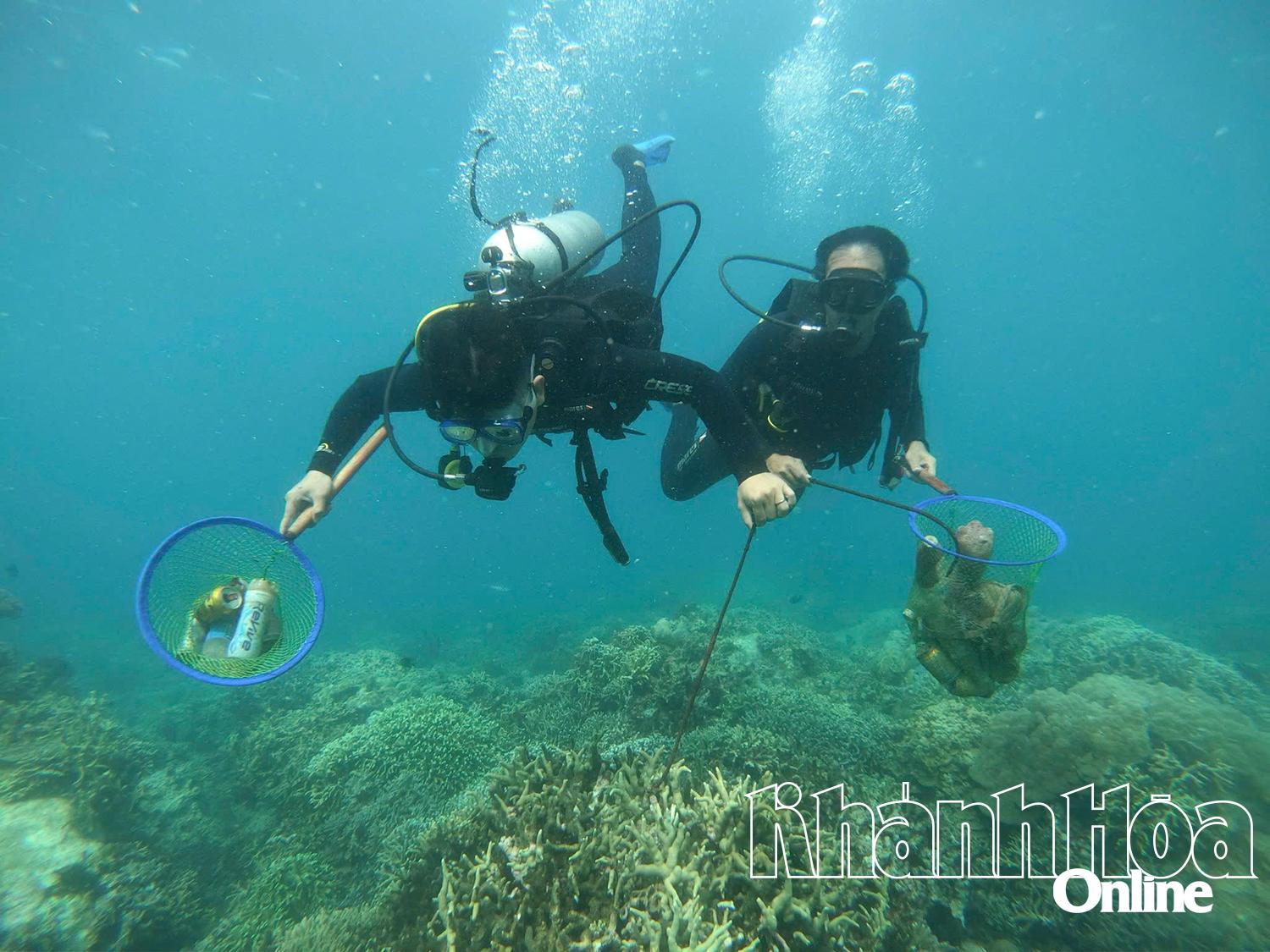 |
| Picking up trash on the seabed in Nha Trang Bay. |
Hazards from waste
Nha Trang Bay Management Board and 20 members of Nha Trang City Sea Lovers Club have recently spent hours in a clean up dive in the Hon Chong sea waters (Nha Trang City). They pulled up about 100kg of waste, mainly fishing gear and fishing nets caught in coral reefs.
Nguyen Thi Hieu (Vinh Luong Commune, Nha Trang) said, "Many types of plastic waste and pollutants that are hard to biodegrade are found at the bottom of the sea. As a lover of the sea, I hope that residents and tourists will help protect the marine environment."
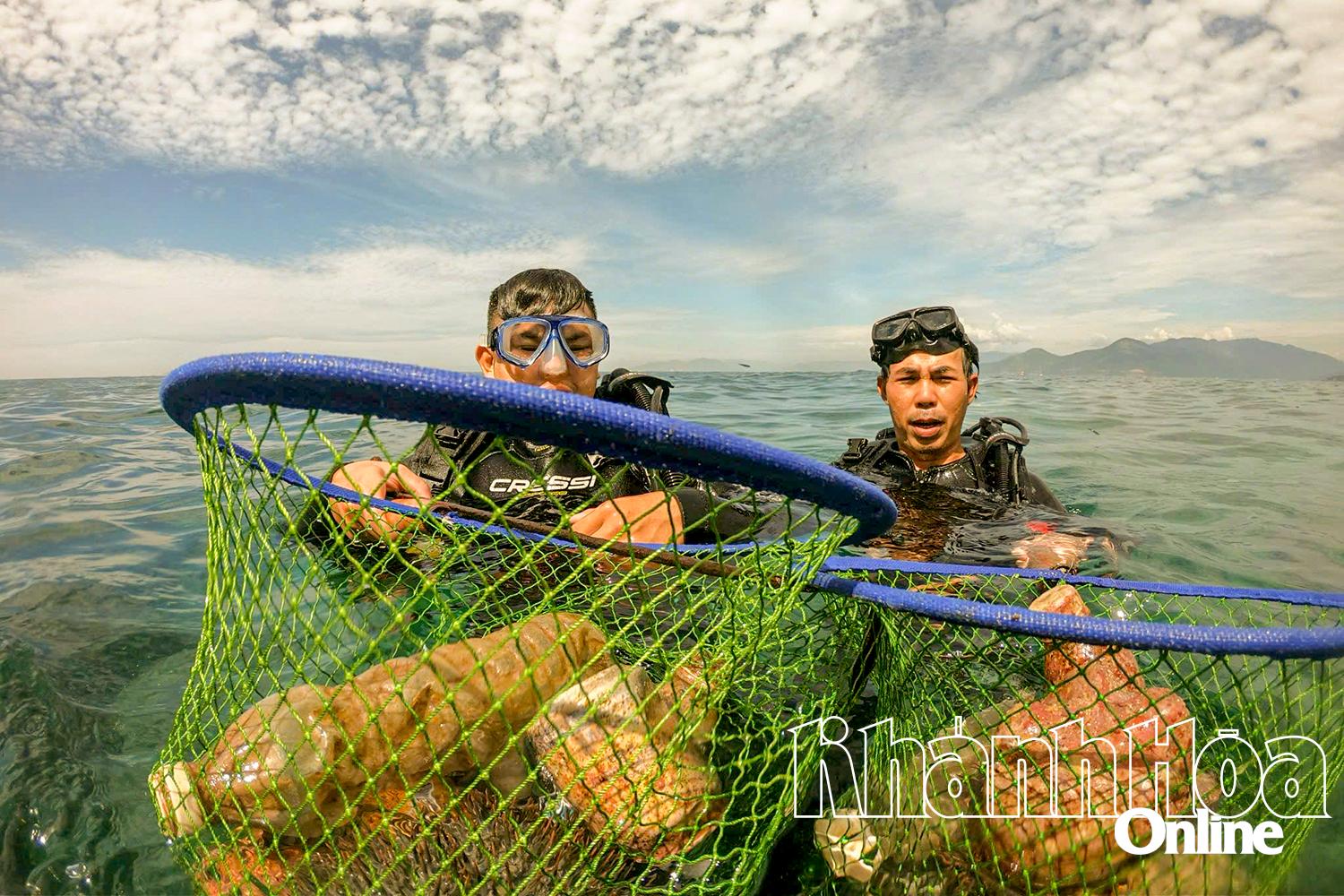 |
| Waste removal in Nha Trang Bay. |
On Tri Nguyen Island (Vinh Nguyen Ward, Nha Trang), various types of waste, including domestic waste, seafood trading byproducts, and aquaculture-related debris, are accumulating, impacting the marine environment. A similar situation occurs on Binh Ba Island (Cam Binh Commune, Cam Ranh City), where 1,039 households rely on aquaculture and fishing. These activities generate approximately 50 kg of plastic waste daily, primarily from food packaging and fishing, further contributing to marine pollution.
According to Hoang Anh Hao, Deputy Director in charge of the Marine and Islands Division, Department of Natural Resources and Environment, several challenges in promoting environmental awareness include ingrained habits, the limited availability of eco-friendly products, and high costs. Additionally, issues such as plastic waste in fisheries, inefficient waste collection at aquaculture farms, and the need for effective fishing waste collection models further complicate efforts to protect the marine environment.
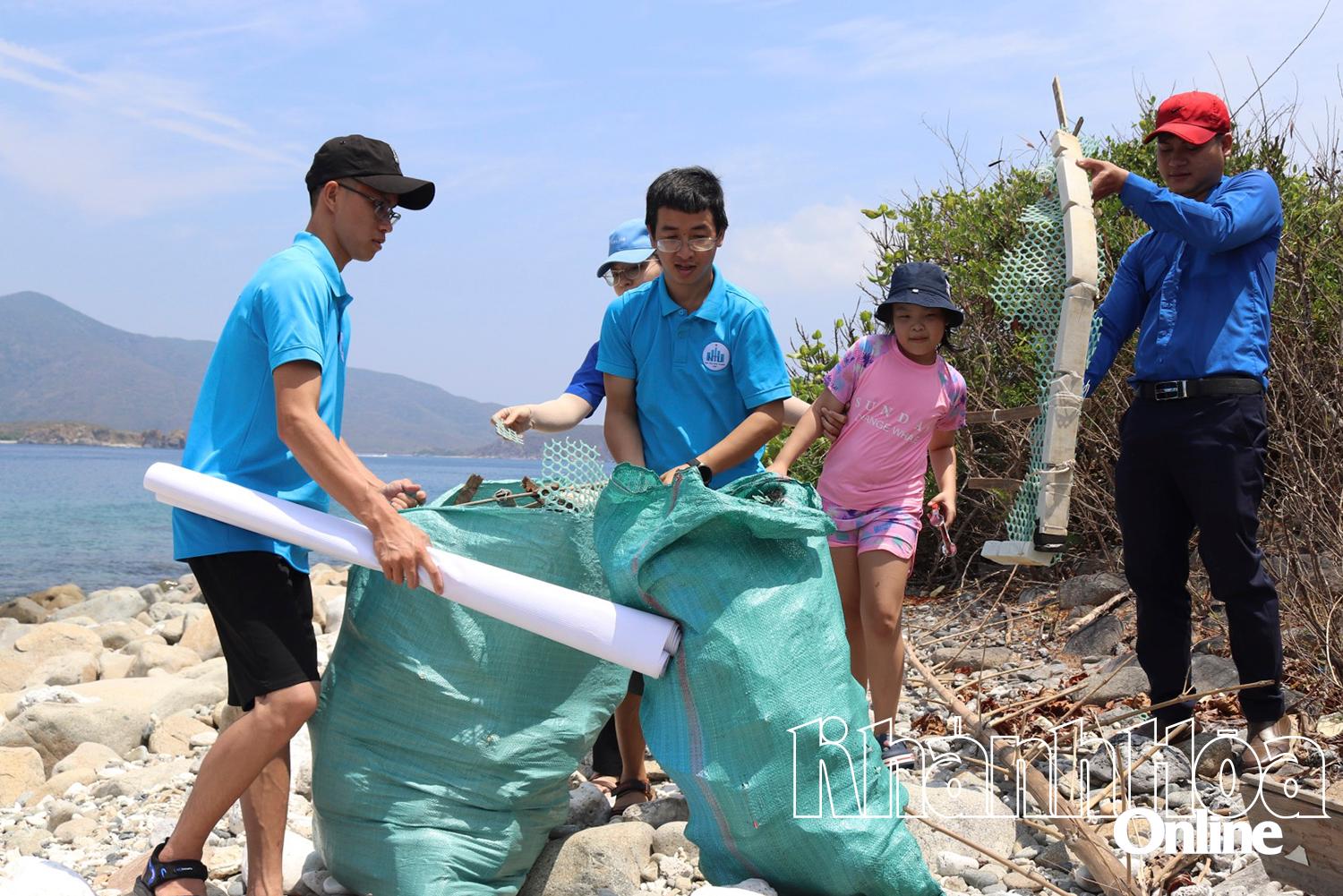 |
| Young people pick up trash in Hon Mun area (Nha Trang Bay). |
Acting together for the clean ocean
For effective protection of Nha Trang Bay environment, Nha Trang City People's Committee has directed coastal communities and related agencies to strengthen propaganda, inspection and strict handling of littering and illegal disposal of fishing gear; prevent tourists to bring disposable plastic products to Nha Trang Bay. The city is also proposing that the province invest in waste treatment projects using advanced technology to deal plastic waste issues.
According to the Department of Culture, Sports and Tourism, a survey by the travel platform TripAdvisor shows that 34% of tourists are willing to pay more to stay at eco-friendly hotels; 50% of international tourists are willing to pay more for travel companies that protect the environment and support local communities. This demonstrates that green tourism not only supports sustainable development but also enhances its appeal to high-spending, responsible travelers.
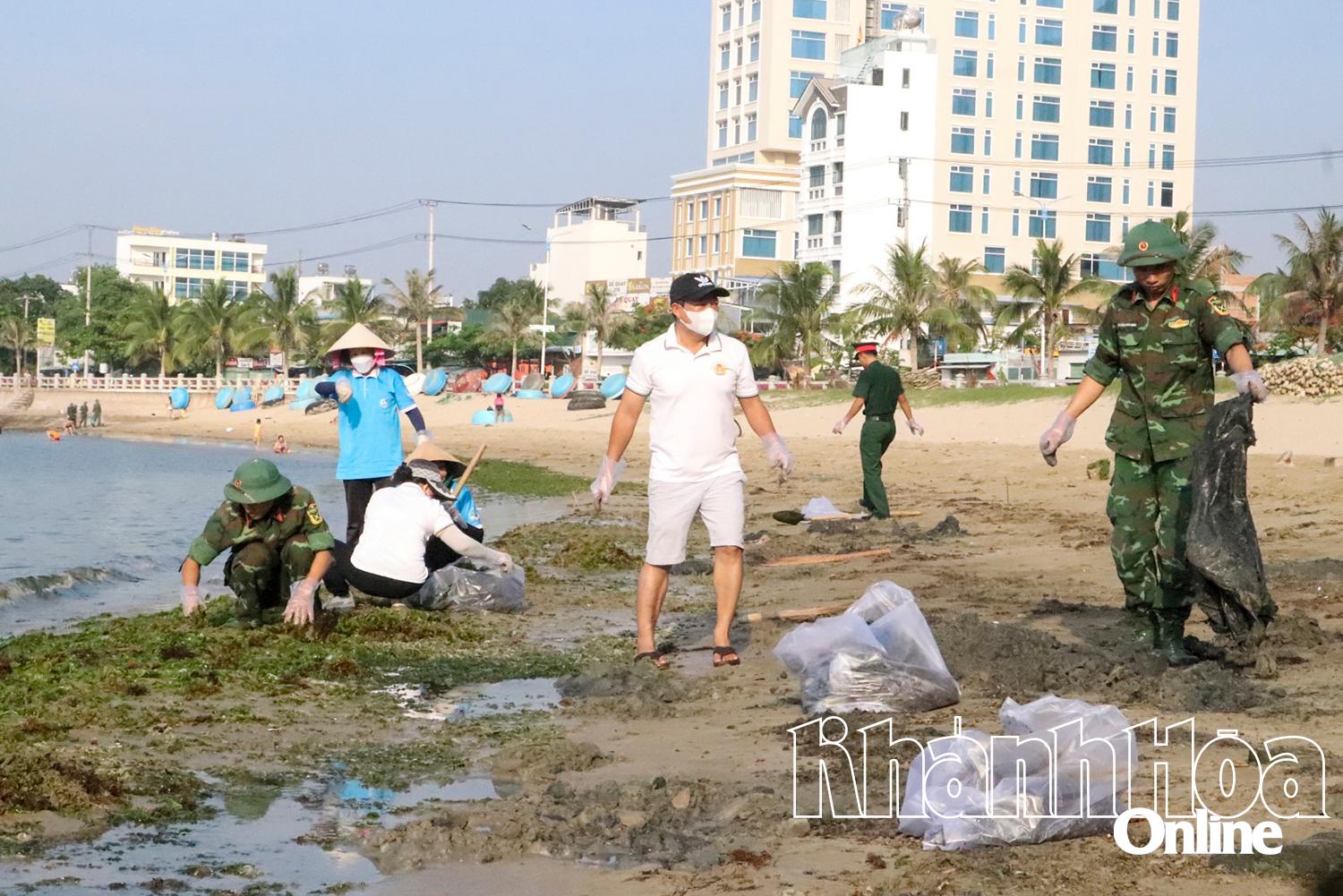 |
| Removing litter to protect the environment along Nha Trang Bay. |
To address the current plastic waste issues in the tourism industry, it is necessary to soon develop criteria for evaluating and ranking “green tourism”, deploy green labeling for tourism businesses; raise awareness among the community, businesses and tourists; gradually replace plastic with environmentally friendly materials; invest in modern recycling equipment and technology to reuse plastic waste; develop smart waste management apps, optimize the treatment process right at the source.
The Provincial People's Committee has promulgated a direction to request local departments, agencies and localities to continue implementing the Action Plan on ocean plastic waste management by 2030 (issued on February 12, 2020), with the goal of reducing 75% of plastic waste in the sea and ocean by 2030. 100% of discarded fishing gear will be collected towards ending the disposal of fishing gear directly into the sea; 100% of tourist areas along the coast will reduce the use of disposable plastic products and non-degradable plastic bags.
Achieving these goals requires a collective effort from the entire political system, business communities and residents, along with strong international cooperation, to ensure a clean ocean for future generations.
T.Thinh
Translated by N.T









Thông tin bạn đọc
Đóng Lưu thông tin