
Driven by a deep love for the sea, volunteers from diving clubs and organizations across the country have eagerly invested in equipment, traveling hundreds of kilometers to Nha Trang Bay and coordinated with State management agencies to carry out extensive seabed clean-up efforts. Hundreds of kilograms of trash on the seabed have been brought ashore for proper treatment, contributing to the recovery of the marine ecosystem.
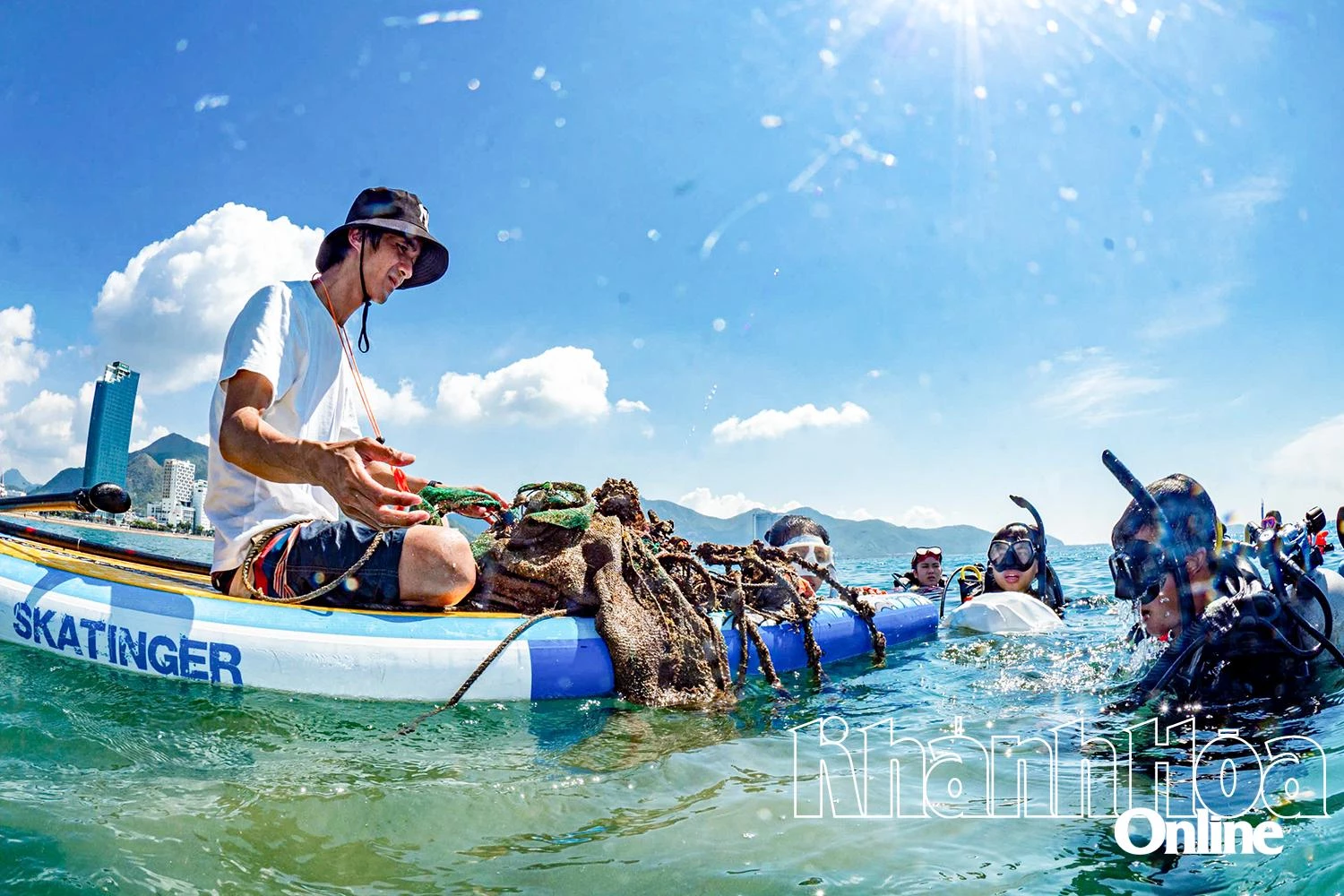 |
| Garbage is collected by volunteers from the seabed. |
Clean-up dives
From June 20 to 23, Tran Ngoc Anh, together with 10 members of Viet Divers Diving Club in Ho Chi Minh City went on a clean-up dive in Nha Trang Bay. The group members, jointly with Nha Trang Bay Management Board rent a canoe to the diving spots to remove trash from the seabed in the areas of Dam Bay, Hon Chong, Hon Bac (in Nha Trang Bay). In 3 days, they collected more than 220kg of waste such as plastic bottles, plastic bags, fishing nets... stuck on the seabed in Nha Trang Bay and brought them ashore for proper treatment.
Viet Divers Diving Club regularly organizes 3 to 4 annual trips across Vietnam to such destinations as Nha Trang, Con Dao, Phu Quoc and Vinh Hy for underwater clean-up dives and removal of crown-of-thorns starfish. These efforts are part of their ongoing commitment to protecting marine ecosystems.
The clean-up dives are jointly organized by Nha Trang Bay Management Board to maximize efficiency and protect the delicate marine environment. At each diving site, volunteers divided into small groups of 3 to 4 divers gather trash into collection bags, which are then secured to buoys for retrieval at the surface. Pieces of fishing nets stuck in the coral ecosystem are gently removed to avoid affecting the coral.
As a member of the Sea Lovers’ Club in Khanh Hoa Province, Nguyen Bao Minh Ngoc (Nha Trang City) has also participated in clean-up dives many times to collect trash in Nha Trang Bay. “Most recently, in April 2025, her group collected more than 100kg of trash and fishing gear stuck on the seabed in the Hon Chong - Dang Tat area.
Abandoned fishing gear lost or discarded in the ocean poses serious environmental damage to marine ecosystems poses serious environmental damage to marine ecosystems. It is particularly harmful to marine life, including fish and coral reefs. “We are happy to remove the fishing gear from the sea bed to help protect the marine species,” said Nguyen Bao Minh Ngoc.
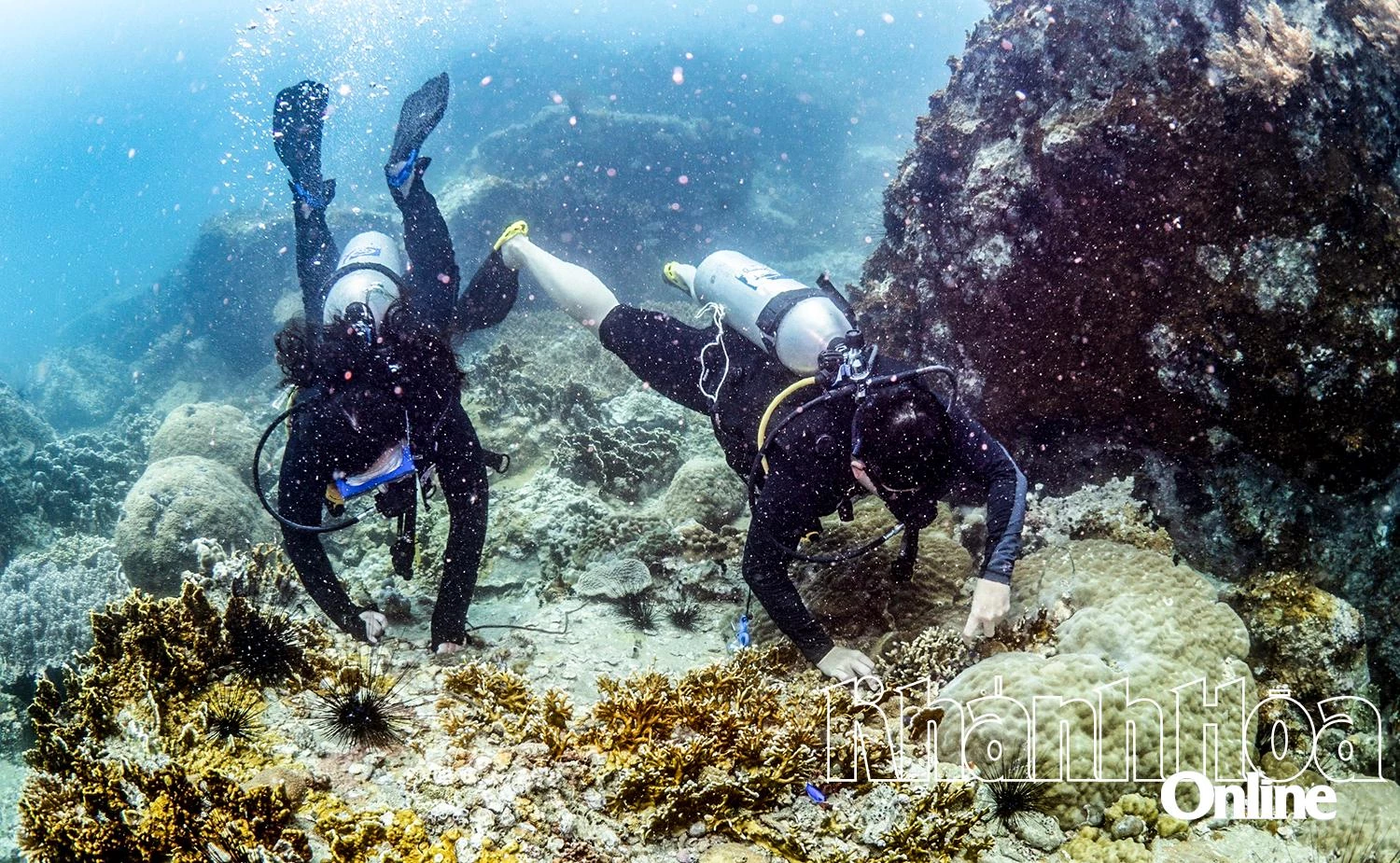 |
| Volunteers join seabed clean-up in Nha Trang Bay. |
Acting for clean oceans
In Malaysia, scuba diving is strictly regulated to protect marine ecosystems. Each diver is typically required to sign a commitment or declaration pledging not to harm the underwater environment. This includes not disturbing marine life, and following eco-friendly diving practices. Violations of marine regulations during scuba diving can result in fines or penalties.
Therefore, Linh Dan hopes that local State management agencies would take more drastic actions to raise awareness among people and tourists about protecting the precious marine ecosystem.
According to Nguyen Duc Minh Tan, Deputy Head of Conservation Department (Nha Trang Bay Management Board), in addition to diving to collect data about the sea, every month, the board coordinates with volunteers from diving organizations in and outside the province to conduct clean-up dives collect trash and catch crown-of-thorns starfish in Nha Trang Bay.
The members join efforts to remove underwater debris such as plastics, fishing nets, and other waste from coral reefs, seafloors. But they’re more than just trash collection; they’re about education and protecting fragile ecosystems for the sake of the marine ecosystem.
Diving groups and individuals have shared their efforts in collecting trash and removing crown-of-thorns starfish on their social media with thousands of followers, inspiring both locals and tourists to join hands in preserving the beauty of the sea.
T.Thinh
Translated by N.T









Thông tin bạn đọc
Đóng Lưu thông tin