
In the period of 2020 - 2025, the Party Committees of Khanh Hoa and Ninh Thuan provinces (before the merger) focused on leadership and strategic direction, achieving notable progress in human resource development to support rapid and sustainable growth. These achievements now serve as a solid foundation for the newly merged Khanh Hoa Province to further enhance the quality of its human resources, ensuring they meet the evolving demands of development in the coming years.
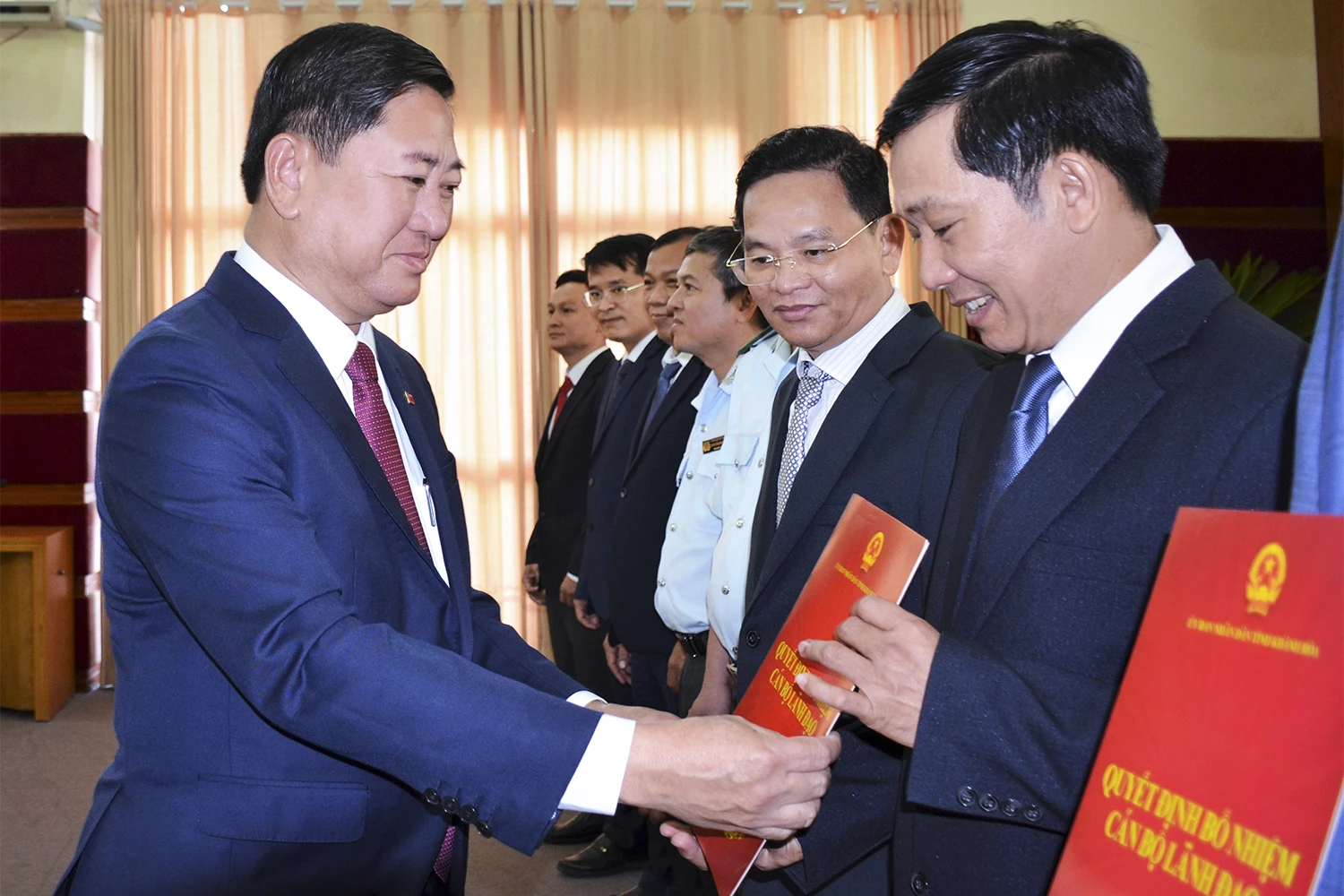 |
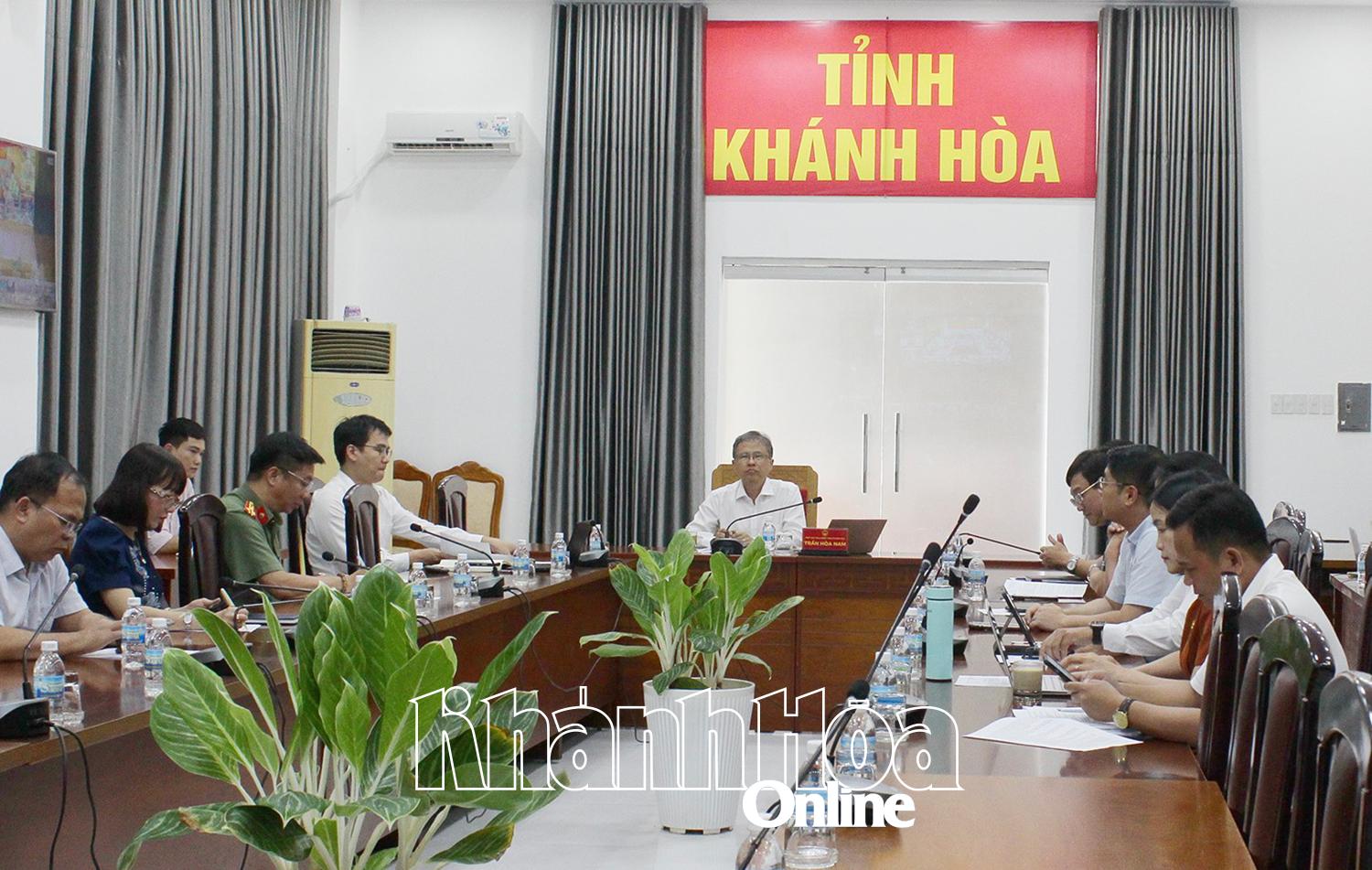
| Tran Quoc Nam, Deputy Secretary of Khanh Hoa Provincial Party Committee, Chairman of the Provincial People’s Committee, Head of the National Assembly Delegation of the province, presents decisions on the appointment of leaders of agencies (July 2, 2025). |
Satisfactory results
Starting July 1, new Khanh Hoa Province officially commenced operations in alignment with the national timeline. To ensure the effective functioning of its administrative apparatus, the province has actively coordinated training and professional development programs for civil servants. Recently, approximately 1,000 civil servants participated in online training focused on state management within the Home Affairs sector. Earlier in July, nearly 1,300 civil servants from the Justice sector received professional development support. According to Ly Nguyen Nguyen Vu, Director of the Department of Justice, Khanh Hoa was the first locality to propose post-merger professional training initiatives to the Ministry of Justice, aiming to guarantee unified, seamless and efficient operations.
Recognizing human resources as a key driving force and essential condition for integration and development, over the past five years, the Party Committees of the 2 provinces have implemented initiatives to enhance human resource quality. In Khanh Hoa Province, following the issuance of Resolution No. 07 in 2021 by the Provincial Party Committee on the Human Resource Development Program for the 2021–2025 period, the Provincial People's Council adopted a corresponding resolution. The Provincial People's Committee then developed an implementation plan, which was further detailed into annual action plans by Party committees across localities and agencies.
Several specific mechanisms and policies, as well as incentives for training, development, and improvement of human resource quality, have been implemented. Educational institutions have strengthened their partnerships with businesses to advance vocational training with a particular emphasis on skill development aligned with green transformation and digital transformation. Strategic investments have been directed toward key training sectors such as fisheries, economics, logistics, tourism services, law, English language, and information technology. Vocational training institutions have undergone restructuring to enhance efficiency and alignment with development goals. Notably, the province has taken the lead in implementing Key Performance Indicators (KPIs) for public servants.
In Ninh Thuan Province (before the merger), the Provincial Party Committee had directed the improvement of the quality of human resources in key economic sectors, resulting in positive changes. The policy of fundamental and comprehensive innovation in education and training, combined with the restructuring of the school system, has yielded satisfactory outcomes.
The proportion of schools meeting national standards has surpassed set targets, reflecting significant progress in educational quality. Educational managers and teachers have been increasingly standardized. The vocational training network has been expanded through socialization efforts. Professional development initiatives, including the appointment, transfer, and rotation of cadres, have been carried out in strict accordance with regulations. Scientific research activities, particularly in high-tech agricultural production, have been actively promoted. Additionally, indicators related to provincial-level assessments, local innovation and digital transformation have shown marked improvement.
According to Vo Chi Vuong, Director of the Department of Home Affairs, currently, Khanh Hoa Province has approximately 14,000 civil servants working in specialized agencies and public service units at the provincial level, and around 24,000 at the commune level, along with nearly 1,600 non-specialized personnel. The planning, rotation, and placement of cadres are conducted based on individual capacity and strengths. These efforts are closely aligned with the development of young cadres, female cadres, ethnic minority cadres, and the strategic preparation of successor personnel to ensure continuity and effectiveness in public administration.
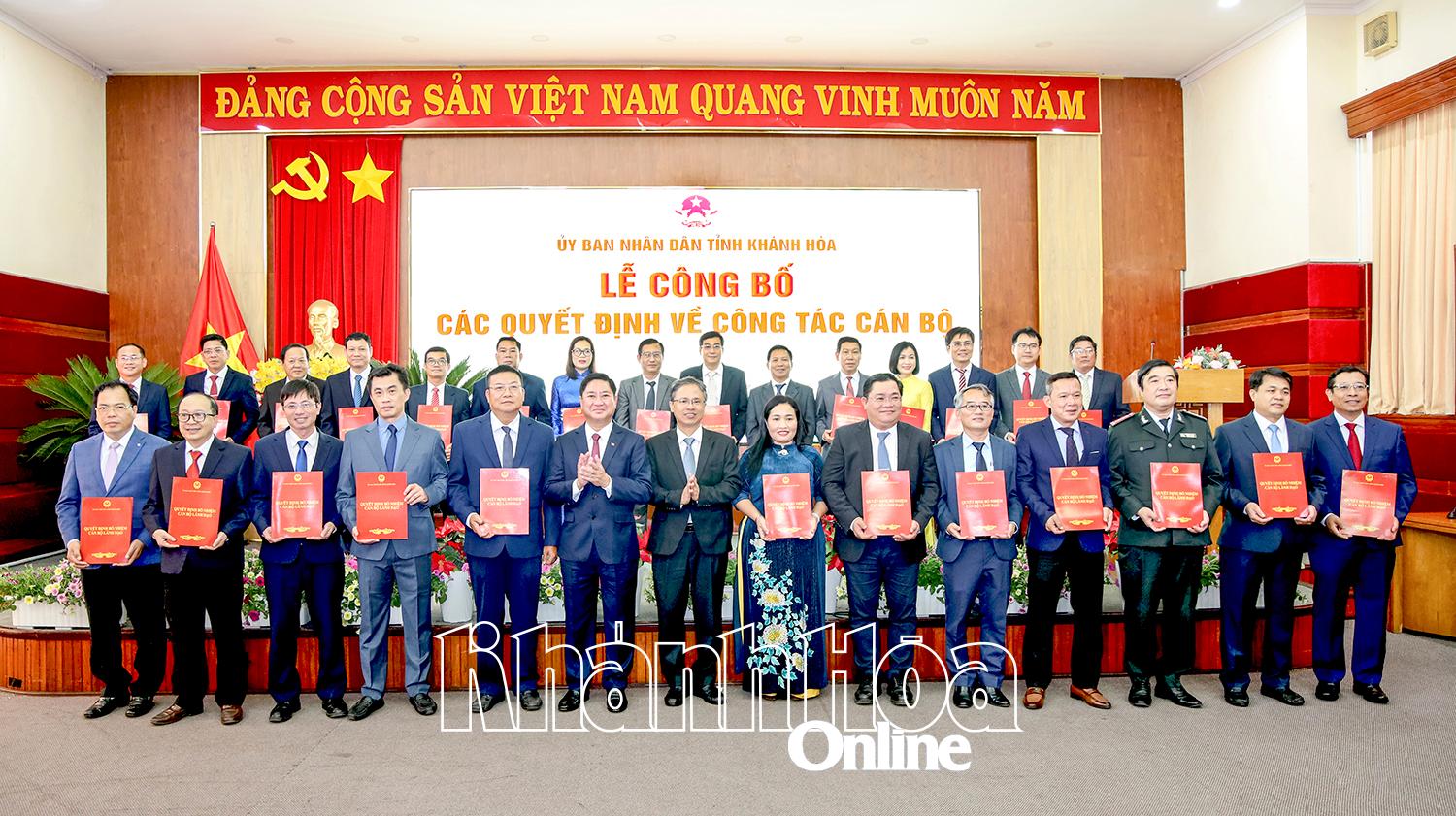 |
| Leaders of the Provincial People's Committee present decisions regarding the appointment of leaders of agencies(July 2, 2025). |
Advancing human resource development
With a vision to become a centrally-governed city by 2030, Khanh Hoa has identified one of its three strategic breakthroughs as the development of high-quality, highly-qualified human resources. This includes implementing specialized policies to attract and nurture talent, driving innovation in personnel management, and building a core leadership team that is exemplary in ethics, competence and reputation to meet the demands of a new development era. Recognizing people as the central force, the province aims for 90% of its workforce to be trained by 2030, with at least 40% holding professional degrees or certificates.
In the period of 2025 - 2030, along with professional training and development for civil servants, the province will promote the use of high-quality human resources, especially for large and strategic projects; human resources focused on harnessing and maximizing the province’s development potential and advantages; and highly-trained professionals in the medical and cultural sectors.
The province also focuses on in-depth training in renewable energy and other areas of strength; developing potential and infrastructure for science and technology, innovation, and digital transformation so that Khanh Hoa will be among the top 10 provinces and cities in the country by 2030.
The trained workforce demonstrates a collaborative mindset, strong organizational capabilities, and proficiency in leveraging value chains. Especially, the province is placing strategic emphasis on investing in human resources to support the development of the Truong Sa Special Zone, with the vision of transforming it into a national hub for economic, cultural, and social activities at sea.
The province will continue to comprehensively implement the scheme on job positions and KPIs to drive meaningful and objective improvements in the evaluation and classification of Party members and civil servants. Efforts will focus on promoting decentralization and delegation of authority, reinforcing discipline and administrative order, and advancing public administration reform. Workforce streamlining will proceed according to the roadmap, alongside innovations in recruitment, talent attraction and retention mechanisms. The province also aims to accelerate e-government development and digital transformation, while enhancing the capacity of specialized commune-level cadres.
In the field of education and training, the province will improve the quality of university programs to meet regional and international standards, attract major universities to establish campuses locally and strengthen partnerships in training and academic cooperation. Tuition support policies will be introduced to encourage vocational education and targeted initiatives will be developed to enhance the quality of key educational sectors.
N.V
Translated by N.T







Thông tin bạn đọc
Đóng Lưu thông tin