
The Politburo’s Resolution No. 71/2025 marks a pivotal moment in Vietnam’s educational transformation, positioning education as the cornerstone of national development. In alignment with this vision, Khanh Hoa Province is seizing new opportunities to innovate and elevate its education and training sector, laying the groundwork to become a regional hub for high-quality human resource development, scientific research, technological advancement, and innovation.
 |
| Teachers and students of Au Co Junior High School (Nha Trang Ward). |
According to Vo Hoan Hai, Member of the Provincial Party Standing Committee, Director of the Department of Education and Training, Resolution No. 71 is a historic directive with a bold strategic vision, following the Resolution No. 29/2013 of the Party Central Committee on fundamental and comprehensive innovation of education and training, meeting the industrialization and modernization in the conditions of a socialist-oriented market economy and international integration.
The Resolution emphasizes that education is a top priority, a key driving force to enhance national competitiveness, and affirms the need to create breakthroughs in educational development. Specifically, Resolution No. 71 provides a strategic framework for synchronous implementation with Resolution No. 09 of the Politburo on building and developing Khanh Hoa Province through 2030, with a vision to 2045. Accordingly, education and training is the foundation for cultivating high-quality human resources in such key areas as marine economy, tourism, technology, renewable energy and innovation.
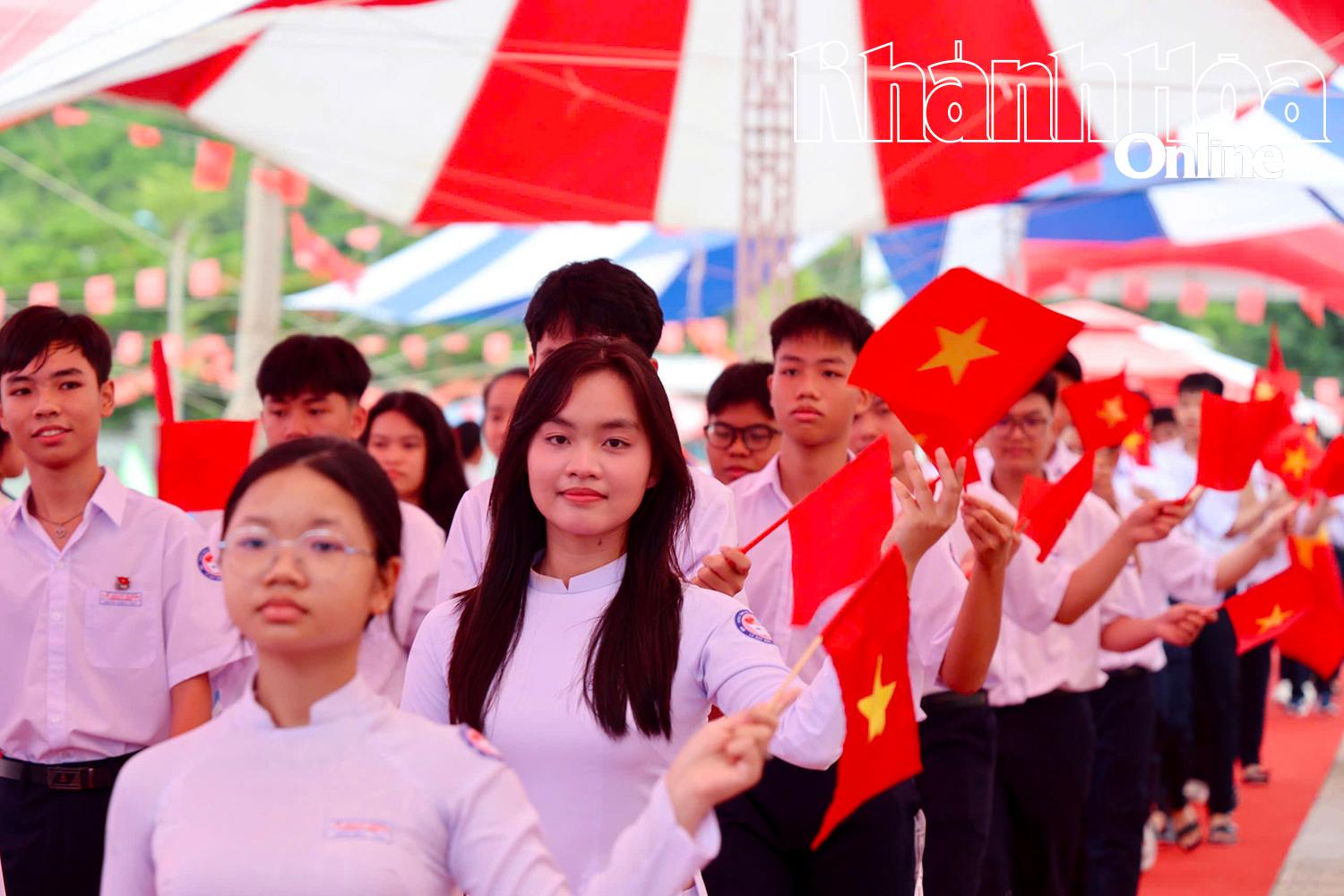 |
| Students of Le Quy Don Gifted High School, South Nha Trang Ward. |
Resolution No. 71 clearly states that a breakthrough in education and training development must start with innovation in mindset, awareness and institutional frameworks, creating strong political determination to develop comprehensive education in the province, specifically with special, superior preferential policies for teaching staff; raising preferential allowances for teachers in pre-school and general education institutions to a minimum of 70%; at least 30% for educational staff, and 100% for teachers in extremely disadvantaged, border and island areas.
Besides, the provincial education and training sector will prioritize the development of a qualified and motivated teaching workforce; consolidate preschool and general education facilities; promote digital transformation; and upgrade university education to create a breakthrough in high-quality human resource training.
Based on Resolution No. 71 and directives by the Central Government on education and training development, the Department of Education and Training has recently submitted a proposal to the Provincial People's Committee recommending that the Standing Committee of the Provincial Party Committee issue a Resolution on the Education Development Strategy of Khanh Hoa Province to 2035, with a vision to 2045 and the Project on improving the quality of teachers and educational managers for the period 2025 - 2030.
Accordingly, the province will build a roadmap for educational advancement, focusing on promoting local specific advantages to drive innovation and growth; set out specific, breakthrough goals and solutions that align with regional and national educational trends and gradually global trends.
Khanh Hoa Province has been benefiting from several specific mechanisms for development, including in education and training. The province has nearly 800 schools from kindergarten to high school, with over 25,000 staff; the quality of comprehensive education is maintained stably with a focus on gifted education. By the end of 2024, the whole province had 2 universities and 3 colleges that meet quality accreditation standards. Despite recent progress, challenges remain in the education sector, including insufficient infrastructure, a shortage of teaching staff and disparities in educational access and quality across localities.
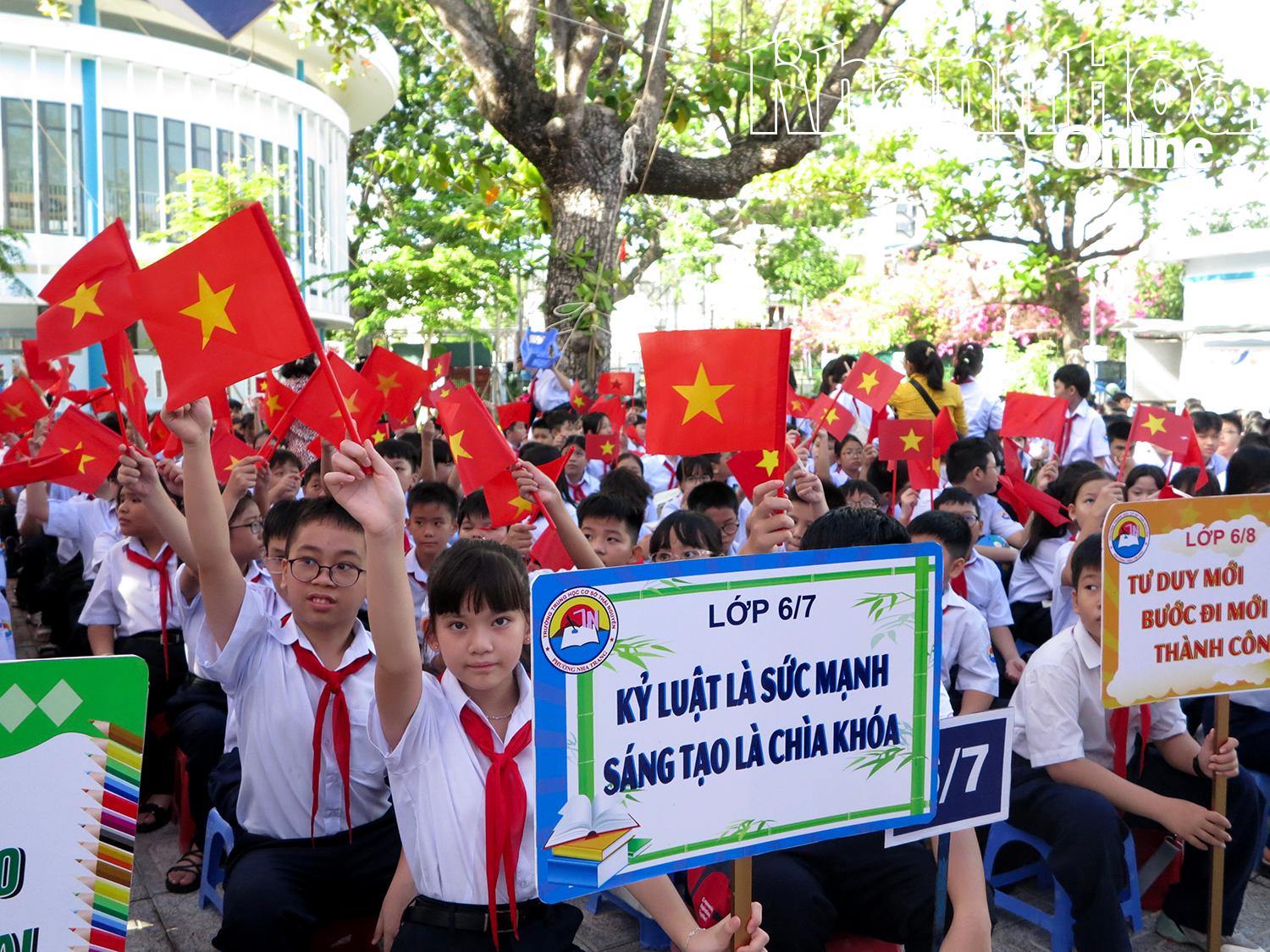 |
| Students of Thai Nguyen Junior High School, Nha Trang Ward. |
The goal of the provincial education and training sector is to improve the quality of comprehensive education at all levels. In particular, preschool and general education are the foundation for personality formation, development of learners' qualities and capacities; vocational education plays a key role in developing a highly skilled workforce; university education is the core for cultivating advanced human resources and talents, driving progress in science, technology and innovation.
The province has set a strategic direction to enhance the training quality of Khanh Hoa University, closely linked with scientific research facilities; foster innovation and academic excellence; and develop Nha Trang University into a prestigious, multi-disciplinary regional institution with significant influence in the South Central region, positioning it among Southeast Asia’s leading universities in marine science, technology, and fisheries.
In addition, the province will build a public college to become a regional hub for high-quality vocational training and practice; encourage the establishment and expansion of branches and training facilities of prestigious domestic and international universities in order to meet the human resource needs for socio-economic development.
"I expect that in the next 10 years, the province will form a synchronous and modern education and training system, capable of providing high-quality human resources, especially in the fields of marine economy, tourism, technology and innovation. This is also the period when Khanh Hoa shapes its position as the leading prestigious education and training center in the South Central region as well as reaching the whole country.
In the vision of the next 15 years, the province aims to become a national education and training center, deeply integrated with the region and the world, contributing to its transformation into a leading hub for science, technology, and innovation. Khanh Hoa education is expected to not only provide high-quality human resource training but also nurture generations of global citizens, meeting the requirements of the national sustainable development in the new era," added Vo Hoan Hai.
H.N
Translated by N.T







Thông tin bạn đọc
Đóng Lưu thông tin