
On August 15, the Prime Minister issued Decision No. 1745 promulgating the Plan to implement Conclusion No. 149, dated April 10, 2025, by the Politburo on promoting the implementation of Resolution No. 21, dated October 25, 2017, by the 12th Party Central Committee on population in the new stage.
The objective of the plan is to enhance the effectiveness of population work in the new situation; promote the combined strength of the political system and people of all walks of life; strengthen inter-sectoral coordination between central and local ministries and sectors in the implementation of Conclusion No. 149, striving to achieve the goals and targets defined in Resolution No. 21 by the end of 2030.
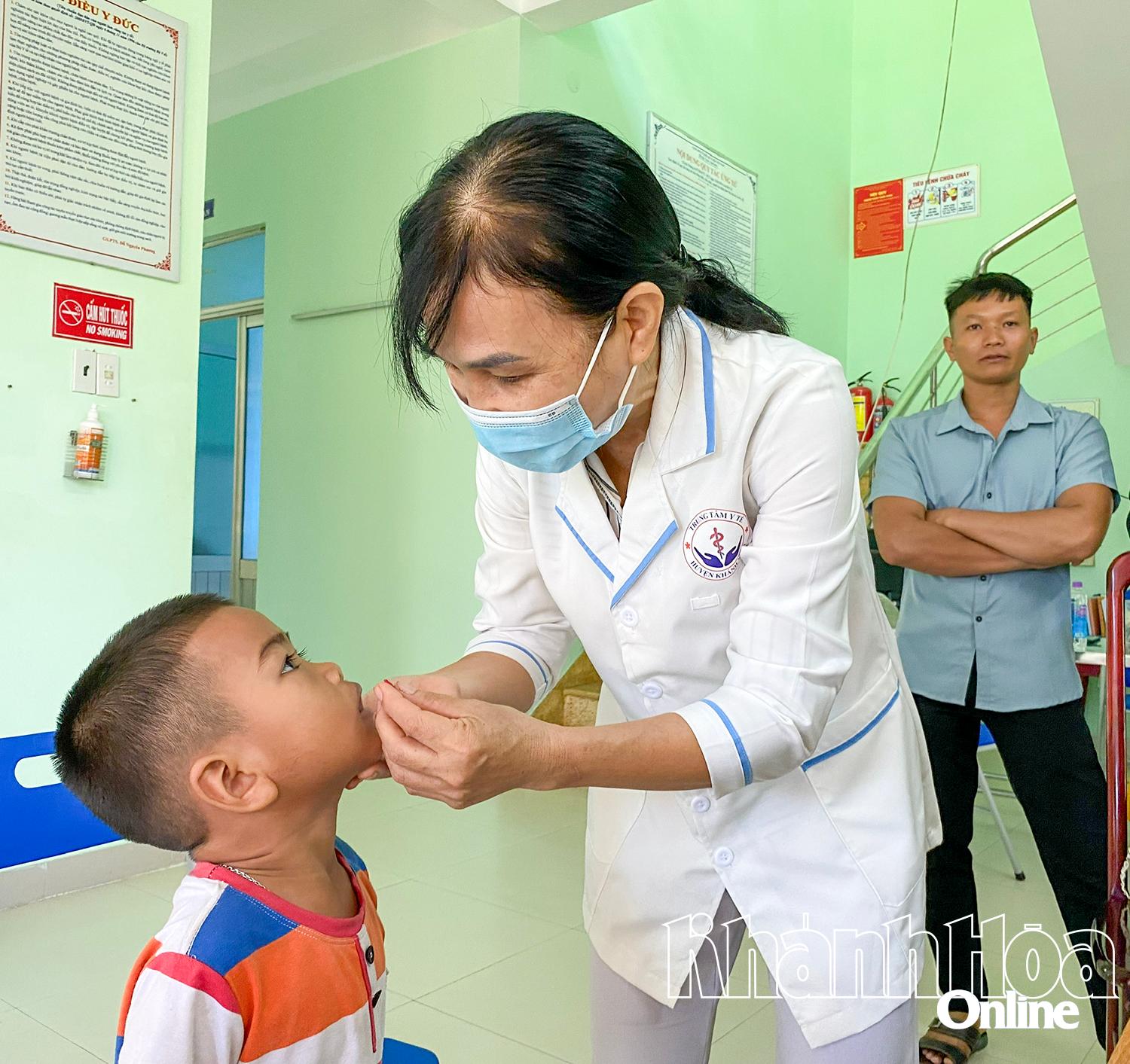 |
| Giving a child vitamin A at a medical station in Khanh Hoa Province. |
The plan also sets out key tasks and solutions, including requiring ministries, agencies, People's Committees of provinces and centrally run cities to urgently propagate the Conclusion No. 149 to all Party members, civil servants and workers to create unity, raise awareness and actions of the entire society; improve the effectiveness of population work in the new situation; strengthen the Party's leadership in population work, especially shifting the focus of population policy from family planning to comprehensive approach to population and development—aligned with the goals of building a prosperous nation in the new era.
Conclusion No. 149 of the Politburo requires Party Committees, Party organizations, authorities, localities and the health sector to focus on implementing key tasks and solutions, including continuing to strengthen the Party's leadership in population work; innovate propaganda; formulate policies and laws on population; synchronously deploy solutions on population, etc.
The Prime Minister assigned responsibilities to ministries, sectors and localities. Specifically, the Ministry of Health presides over and coordinates with relevant ministries, sectors, People's Committees of provinces and centrally run cities to synchronously deploy solutions on population; Focus on developing and improving population service network regarding the reproductive health care service; screening and early diagnosis of prenatal and neonatal diseases; elderly care; improving the health of mothers and children; standardizing the population officials; expanding international cooperation; effectively implementing the National Target Program on health care, population and development for the period 2026 - 2035 (after approval); Synchronize specialized population databases to the National Data Center... The Ministry of Education and Training innovates the content and methods of education on population, reproductive health care, and gender; strengthens physical education and improves physical fitness in the national education system; and continues to innovate education policies to supplement activities related to improving population quality.
Resolution No. 21 sets the population health and development targets to be achieved by 2030. They include maintaining a stable replacement fertility rate of 2.1 children per woman, the level required for population stability across generations; reducing the fertility gap between rural and urban areas, as well as between mountainous and lowland regions, by 50%; ensuring that at least 50% of provinces and cities reach the replacement fertility rate; guaranteeing that all women of reproductive age have convenient access to modern contraceptive methods; and decreasing the number of adolescents and young people experiencing unintended pregnancies by two-thirds; maintaining a sex ratio at birth below 109 boys per 100 live births; ensuring 90% of young men and women receive pre-marital counseling and health check-ups; reducing the incidence of early marriages by 50%, and consanguineous marriages by 60%; proving screening for at least 70% of pregnant women for four common congenital conditions; 90% of newborns for a minimum of five common congenital diseases; raising the average life expectancy to 75 years; guaranteeing that 100% of the elderly possess health insurance cards and receive health care at home, in the community, and at centralized medical facilities; and achieving an average height of 168.5 cm for 18-year-old Vietnamese men and 157.5 cm for women.
C.D
Translated by N.T









Thông tin bạn đọc
Đóng Lưu thông tin