
In recent years, Khanh Hoa's Health sector has implemented many solutions and achieved significant improvements in public healthcare. Entering the period of 2025 - 2030, the Department of Health is developing numerous breakthrough solutions, aiming to become a high-quality medical center of the Southern Central region, in line with the orientation of Resolution No. 72 of the Politburo on innovative solutions, strengthening public health care and protection.
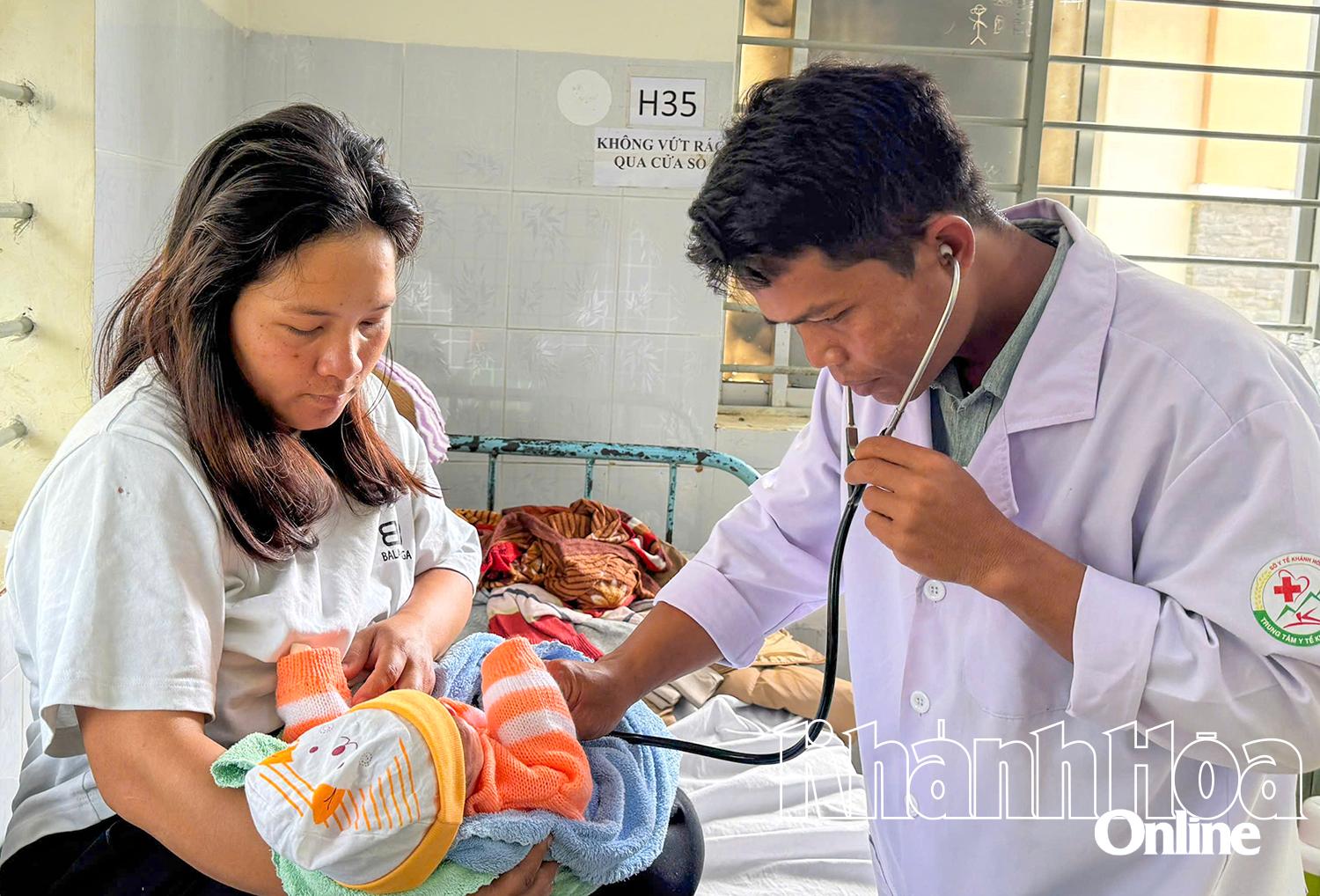 |
| Medical check-up for a baby at Khanh Son Regional Medical Center. |
Outstanding achievements
Despite challenges in infrastructure, equipment, and human resources following the merger, the Khanh Hoa health sector continues to affirm its vital role in the region. The province’s health network is now largely synchronized, spanning provincial hospitals, regional health centers, and commune- and ward-level health stations. Many hospitals have successfully implemented advanced techniques across internal medicine, surgery, and various other specialties.
Major hospitals such as Khanh Hoa General Hospital and Ninh Thuan General Hospital have fostered close collaboration with many domestic and foreign medical experts, receiving specialized technical transfer from central hospitals. Many advanced techniques such as Congenital heart intervention, treatment of congenital malformations, percutaneous biliary lithotripsy; treatment of cleft palate, cardiac ablation and arthroplasty for the elderly, have been successfully implemented, saving thousands of patients, providing opportunities to access high-quality medical services for local people.
Along with improved health care and treatment, the health sector is also a pioneer in applying information technology. Many hospitals have operated electronic medical records, electronic health records and smart hospital models. At medical facilities, cashless payments have been widely accepted. These are important steps towards the comprehensive digital transformation of the health sector.
The provincial health sector has achieved important targets, including 12 doctors per 10,000 people, 36.4 beds per 10,000 people, the rate of medically insured population of 95.8%, 100% medical stations staffed by doctors, etc. The indicators of child health care, HIV/AIDS, tuberculosis, and leprosy disease prevention have consistently remained stable.
Breakthrough solutions proposed
Along with the challenges, the merger has also opened up opportunities for the health sector, such as creating more human resources, adding more medical facilities, and expanding the network. More importantly, Resolution No. 72 of the Politburo is an opportunity for the provincial health sector to develop medical tourism. In addition, thanks to the funding from the Central Government together with the support of experts and higher-level hospitals, Khanh Hoa health sector has improved the quality of medical care and treatment towards becoming a regional medical center.
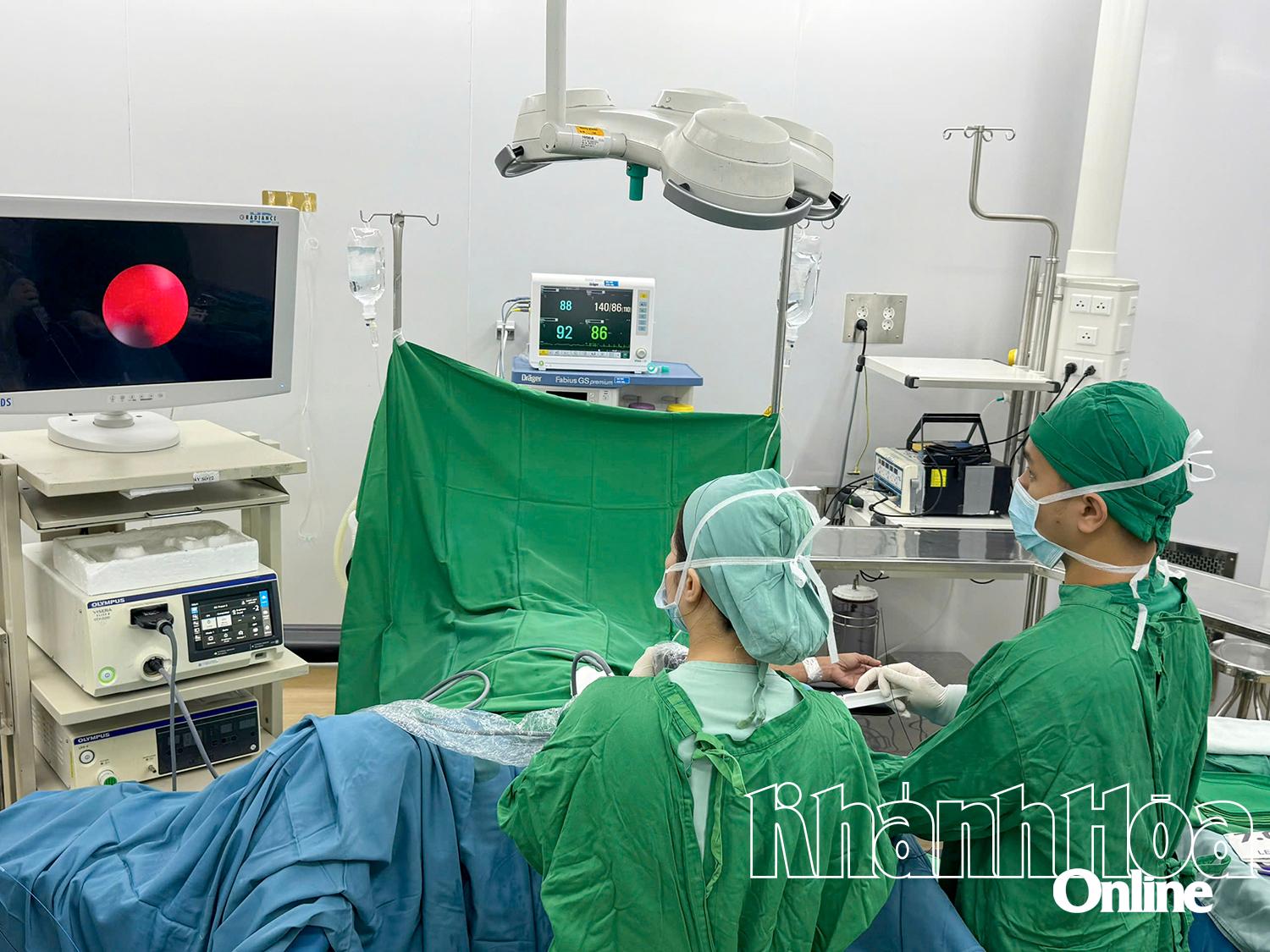 |
| Performing endoscopic surgery at Khanh Hoa General Hospital. |
According to Le Van Khoa, Director of the Department of Health, amid emerging challenges and opportunities, the department has outlined key solutions for the comprehensive development of the health system. Between 2025 and 2030, Khanh Hoa General Hospital will be elevated to serve as a regional medical hub for the Southern Central region. The Traditional Medicine and Rehabilitation Hospital will undergo renovation, expansion, and new construction. Additionally, infrastructure at regional health centers and commune-level health stations will be upgraded to enhance service quality and accessibility.
In alignment with the Ministry of Health’s directives, provincial health stations will be transformed into 'miniature hospitals' equipped with essential medical tools and staffed by qualified doctors. The Department of Health will develop a healthcare initiative on doctor rotation to the grassroots level, deploy the family doctor model, ensuring access to quality medical services in remote areas. Besides, the health sector will provide consultancy for the province to issue preferential policies for doctors to work in mountainous areas and on remote islands; mechanisms to invite domestic and foreign experts to provide professional support, contributing to improving health care.
To address the challenges of an aging population, the Department of Health is developing a plan to establish dedicated geriatric hospitals and foster private sector investment in nursing homes; continuing implementing the policy of universal health insurance coverage; promoting public participation, developing private healthcare, and creating a solid public-private healthcare system in public healthcare with the focus on comprehensive digital transformation with the application of information technology in medical examination and treatment, and medical record management. Hospitals in the province will basically complete the implementation of electronic medical records by September 30, 2025; build a shared data platform; develop a smart hospital system; and expand remote medical consultations and digital healthcare services.
With specific initiatives and strategic solutions, Khanh Hoa’s health sector is steadily advancing toward its goal of becoming a high-quality medical center for the Southern Central region. This transformation not only addresses the urgent need for improved healthcare services but also serves as a catalyst contributing to the provincial socio-economic development.
C.D
Translated by N.T









Thông tin bạn đọc
Đóng Lưu thông tin