
Nghiem Xuan Thanh, Member of the Party Central Committee, Secretary of Khanh Hoa Provincial Party Committee; Lam Dong, Deputy Secretary of the Provincial Party Committee, Chairman of the Provincial People's Council; Nguyen Khac Toan, Deputy Secretary of the Provincial Party Committee, Chairman of the Provincial People's Committee; and Nguyen Khac Ha, Deputy Secretary of the Provincial Party Committee, Chairman of the Provincial Fatherland Front Committee chaired a conference on October 18 to assess outcomes and address challenges encountered during the implementation of the political system and the two-tier local government system.
Present at the event were members of the Provincial Party Standing Committee, leaders of the Provincial People's Council, People's Committee, Fatherland Front Committee, representatives of departments, agencies, communes and wards. The conference was held in person and simultaneously connected online to communes and wards across the province. This event aims to enhance the efficiency of the administrative apparatus.
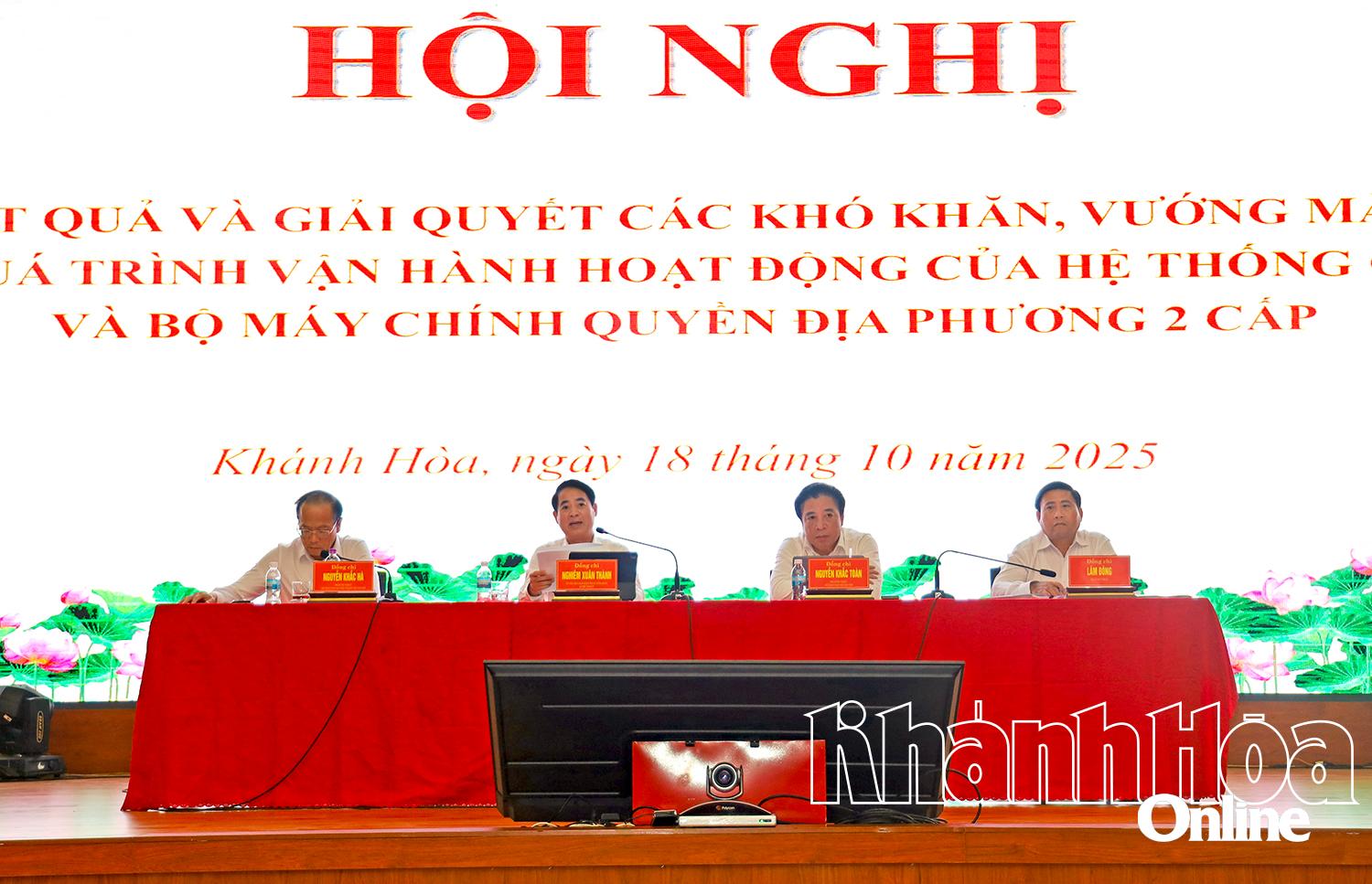 |
| Provincial leaders chair the conference. |
Initial achievements
On July 1, 2025, Khanh Hoa Province officially launched the operation of its political system and the two-tier local government structure. According to Nguyen Thanh Ha, Chief of the Provincial Party Committee Office, from July 1st to now, the political system at the newly-founded commune-level units has basically operated stably and smoothly. The commune-level Party Committee and government have promptly issued working regulations, assigned tasks to affiliated agencies. The personnel arrangement is generally consistent with reality, contributing to initial stability.
Significant attention has been given to the professional development of commune-level civil servants. Their proactiveness, sense of responsibility, and commitment to serving the public have notably improved. Commune-level agencies are now equipped with adequate headquarters, tools, and working facilities. Public administrative service centers are also functioning smoothly and consistently.
State management of budgeting, public investment, land, agriculture, environment, and planning is being effectively implemented at the commune level, ensuring both progress and adherence to regulatory frameworks. Party Committees have promptly organized the dissemination and execution of the Resolution of the Provincial Party Congress, as well as the Resolutions of the Party Congresses of communes and wards for the 2025–2030 term, aligning them with specific local tasks. The settlement of regimes and policies for civil servants and retired workers following administrative restructuring has been carried out transparently.
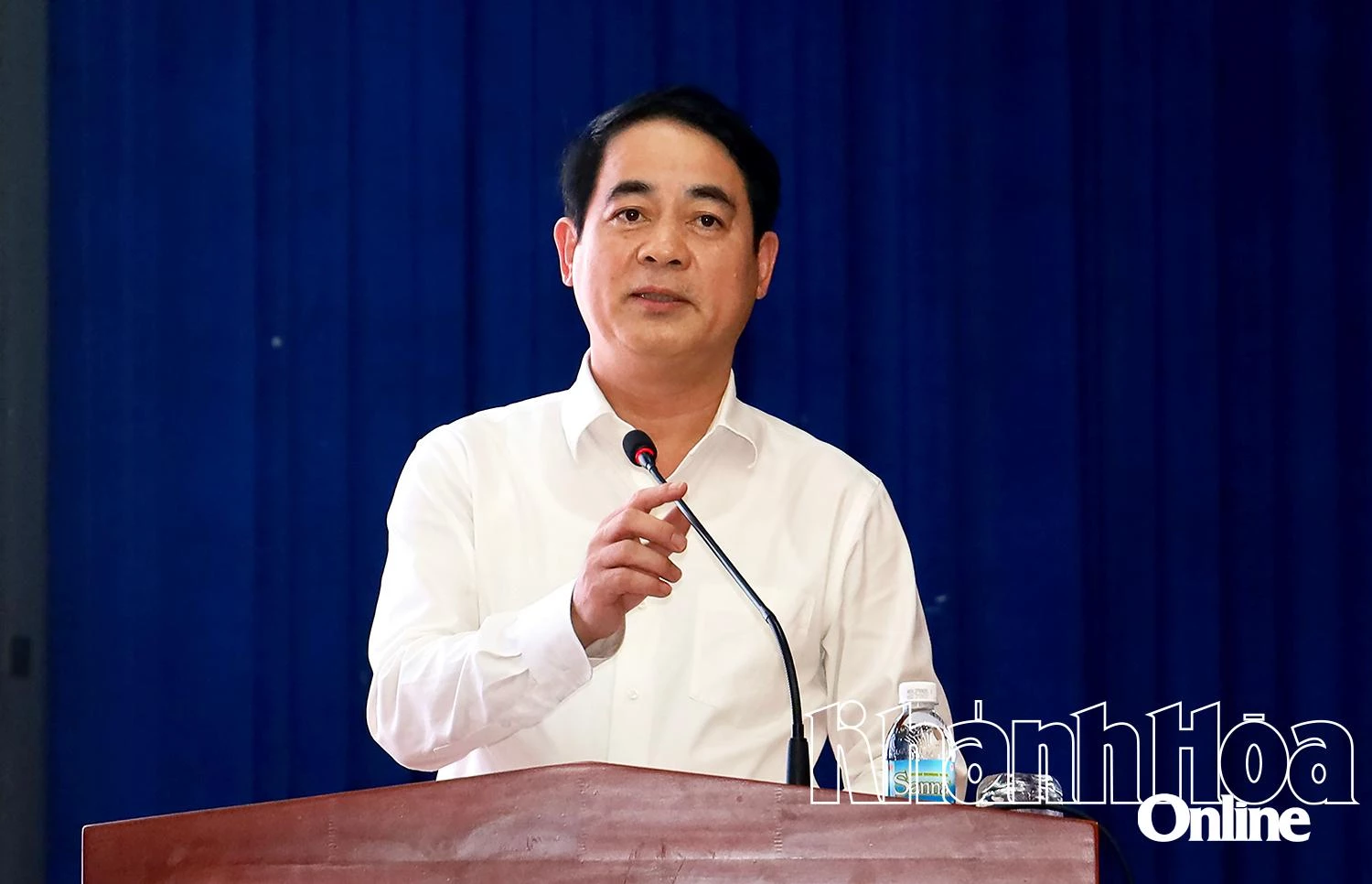 |
| Nghiem Xuan Thanh, Member of the Party Central Committee, Secretary of Khanh Hoa Provincial Party Committee, speaks at the conference. |
According to Vo Chi Vuong, Director of the Department of Home Affairs, recently, the department has organized many training courses on administrative reform, sent civil servants to training courses on implementing democracy at the grassroots level, labor mediator skills, and capacity development, etc.
In accordance with Government Decree No. 170 dated June 30, 2025, former part-time civil servants at the commune level may be recruited if they meet the prescribed standards. To implement this directive, the Provincial People's Committee issued Official Dispatch No. 142 on July 7, 2025, offering guidance on the arrangement, utilization, and policy resolution for these civil servants. Additionally, the province has strengthened commune-level staffing through internal mobilization, rotation, and rebalancing measures to ensure effective personnel deployment and operational continuity.
At the conference, leaders of the Department of Finance, Department of Agriculture and Environment, and Department of Science and Technology also stated that the Provincial People's Committee has issued a decision to allocate the 2025 budget to all 65 communes, wards, and a special zone. The budget includes supplementary funding for social security policies, personnel-related expenditures, and additional expenses arising from the transfer of responsibilities from the district-level budget. Furthermore, the budget for maintaining the lighting system and other public services has been reassigned to the commune-level budget. As of October 9, the province had disbursed 100% of the allocated funds for implementing policies and entitlements for retired personnel.
At the conference, some delegates proposed that the province continue to allocate provincial-level civil servants to communes and wards; continue to have policies to support civil servants; and strengthen professional development for officials, especially by improving skills related to the use of interconnected software systems and information technology to meet the evolving demands of public administration.
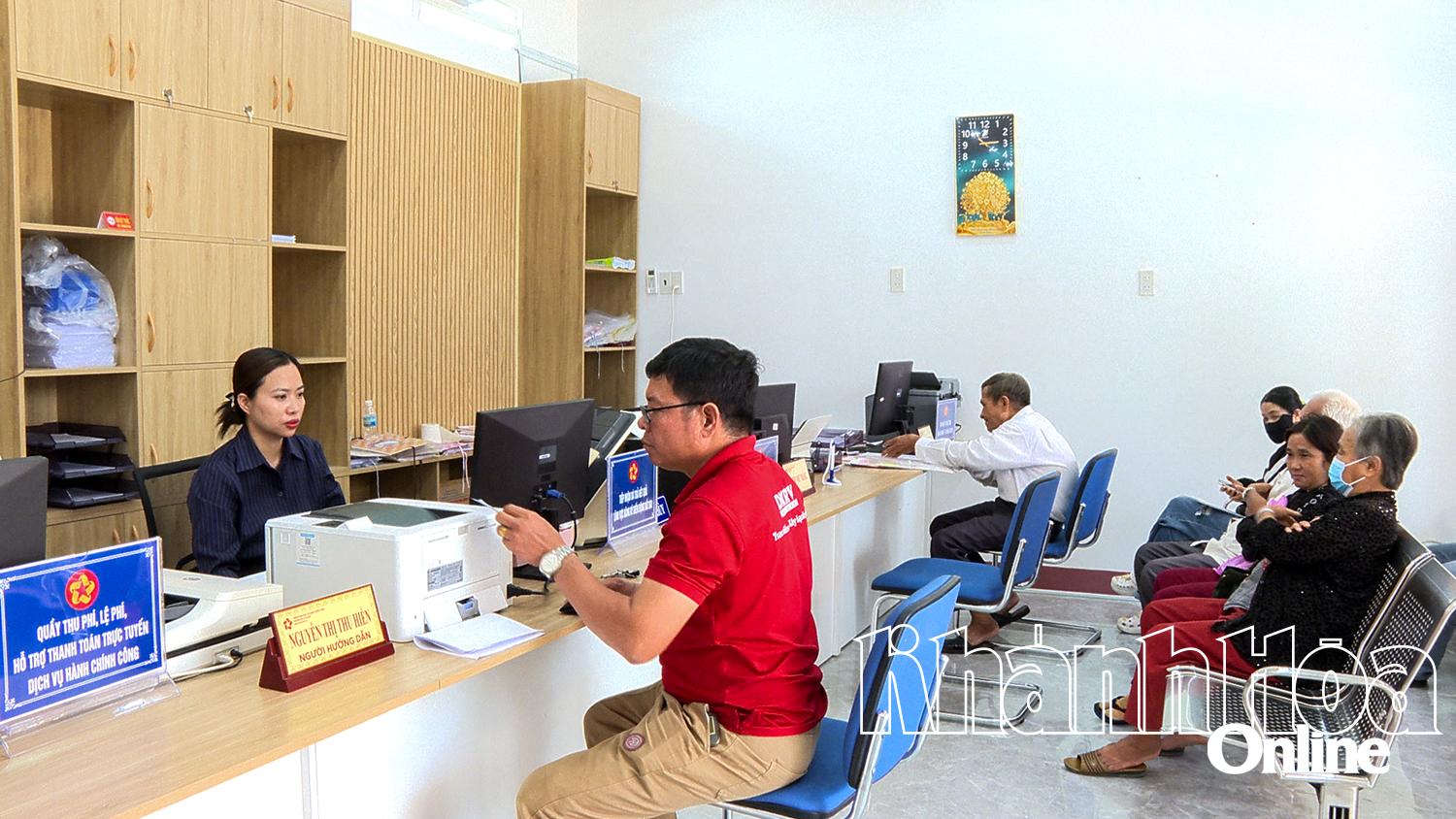 |
| Citizens come for administrative procedures at the Public Administration Service Center of North Cam Ranh Ward. |
Strengthening monitoring and guidance at local and grassroots levels
Speaking at the conference, Provincial Party Secretary Nghiem Xuan Thanh honored provincial-level Party committees, agencies and commune-level Party committees and authorities for high sense of responsibility, efforts to overcome difficulties, promptly resolve arising problems and deploy the political system and the two-level local government apparatus to ensure smooth and efficient operations.
Provincial Party Secretary Nghiem Xuan Thanh requested that, after the conference, the Provincial Party Committee Office to collect feedback and proposals from localities, assign relevant departments and agencies to provide consultancy on appropriate solutions, and incorporate these tasks into the key and breakthrough initiatives for 2025 as designated by the Provincial Party Committee Standing Committee.
The Provincial Party Committee's Organizing Committee, in coordination with the Department of Home Affairs, is responsible for issuing staffing criteria for the commune level. This includes implementing transparent Key Performance Indicators (KPIs) to measure and evaluate work efficiency, and arranging personnel based on job roles, qualifications, and competencies to ensure optimal and effective use of existing staff.
Commune-level standing Party Committees are tasked with making staffing adjustments to align workloads with job responsibilities, ensuring adequate personnel in key areas. Immediate efforts are focused on deploying, mobilizing, and reallocating professional staff, as well as lecturers and students specializing in information technology from colleges and universities to support commune-level operations. Additionally, the province is expediting the strengthening of executive committees and standing committees of Party Committees at the commune and ward levels throughout October.
Regarding infrastructure, relevant units are instructed to enhance inspections of public asset management and usage to ensure alignment with intended purposes and operational effectiveness, particularly for facilities and assets previously managed at the district level. The application of regimes and policies for officials is in accordance with existing mechanisms and policies and within financial capacity. Relevant agencies urgently provide consultancy on allocating sufficient funds to establish all types of planning and transitional projects; develop plans to regulate and arrange facilities; and ensure adequate equipment and working facilities for public administrative service centers, which focus on digitizing records, signatures and settlement results.
The implementation of regimes and policies for officials is carried out in accordance with existing mechanisms and within the province’s financial capacity. Relevant agencies are urgently tasked with advising on the allocation of sufficient funding to support the development of various planning and transitional projects. This includes formulating plans to regulate and arrange facilities, and ensuring adequate equipment and working conditions for public administrative service centers. These centers focus on digital signatures, digitizing records, and settlement outcomes.
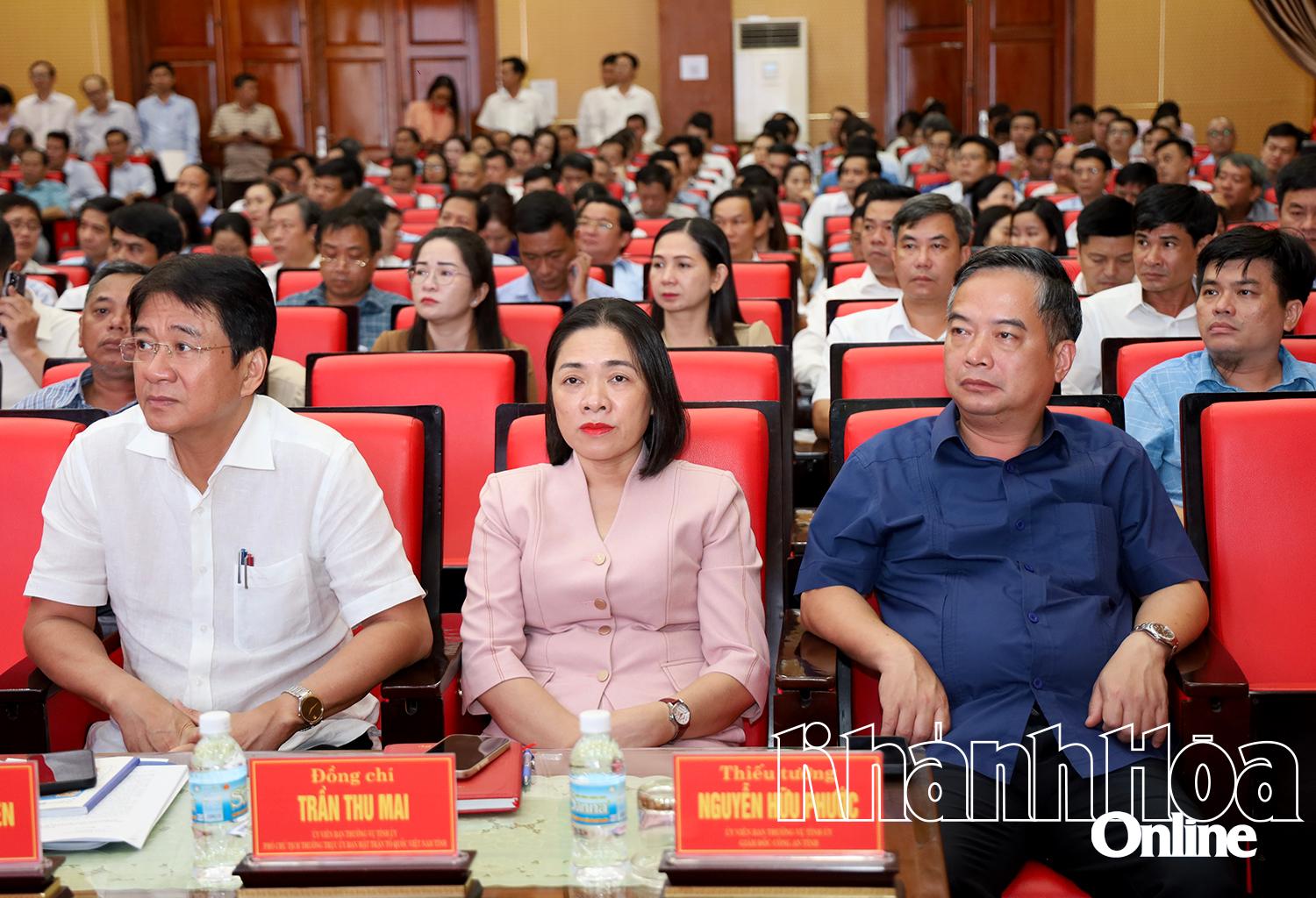 |
| Delegates at the conference. |
The Department of Science and Technology is building a shared platform for communes and wards scheduled to be completed in the first quarter of 2026. Communes, wards, and units are to promote administrative reform, reduce unnecessary meetings, enhance communication about policies and effectiveness of the two-tier local government system; accelerate public investment disbursement to reach 100% completion; promptly issue adjustments to the provincial planning; strictly manage urban order; and coordinate efforts to handle delayed, stagnant and prolonged projects.
N.V
Translated by N.T






Thông tin bạn đọc
Đóng Lưu thông tin