
By September 2026, nearly 1.64 million residents in Khanh Hoa Province had received free periodic health check-ups and screenings, covering about 73.5% of the population and placing the province among Vietnam’s leading provinces for health screening coverage. The health sector is accelerating efforts to achieve full population coverage by the end of 2026.
Facilitating residents’ access to medical examinations
To achieve these results, Khanh Hoa has mobilized its healthcare network, with 44 medical facilities, 65 commune-level health stations, and 13 regional health centers providing free check-ups and screenings. The program has been extended to mountainous, ethnic minority, remote, and island communities to improve access to healthcare.
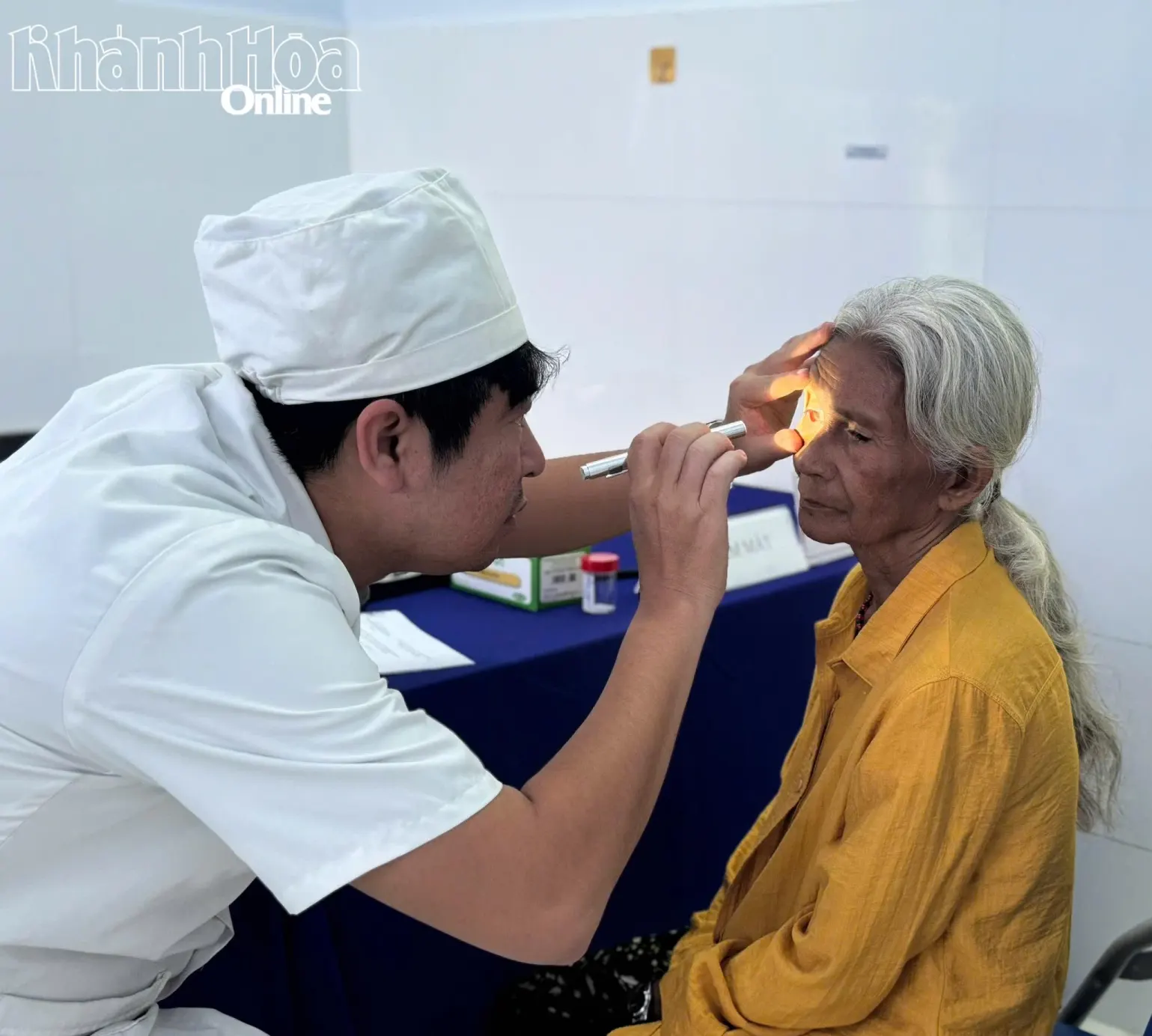 |
| Eye examination for a resident in Nam Khanh Vinh Commune. |
According to Dr. Luong Dang Truong, Director of Van Ninh Regional Medical Center, mobile medical teams have been deployed alongside health stations to deliver free examinations in remote and island areas, ensuring broader access to essential health services. The health sector has also worked closely with local authorities to promote the program and encourage participation. Residents have responded positively, citing the convenience of local services, community outreach efforts, and access to diagnostic services such as electrocardiograms and ultrasound examinations.
Aiming for long-term health management
According to Dr. Le Van Khoa, Director of the Department of Health, regular health check-ups are the foundation of population health management. Combined with electronic health records, they enable early disease detection, proactive monitoring of health risks, and timely treatment at the primary care level. This supports the province’s broader shift from a treatment-focused approach to preventive healthcare.
Despite these achievements, the program has encountered several challenges, according to Dr. Le Van Khoa. These include inconsistent regulations on periodic check-ups and screenings, limited guidance on health insurance reimbursement for early detection services, technical issues in integrating screening data with electronic health records, and the lack of unified funding mechanisms for student health examinations.
To support universal health check-ups, the Department of Health has proposed that the Provincial People's Committee continue to direct departments, agencies, and localities to coordinate in identifying residents not yet screened and strengthen outreach efforts. It is also accelerating data standardization and integration, while calling on the Ministry of Health to issue unified guidance on health insurance reimbursement for screening services and funding for student health examinations.
In addition to expanding coverage, the program aims to strengthen long-term health management. Screening results are integrated into electronic health records on VNeID, helping build a comprehensive health database on public health and care needs.
C.D
Translated by N.T





Thông tin bạn đọc
Đóng Lưu thông tin