
With numerous advantages, Khanh Hoa Province is poised to become a destination for data center investment and the development of a digital technology ecosystem for businesses. This move not only aligns with current trends but also opens up a promising pathway for economic restructuring.
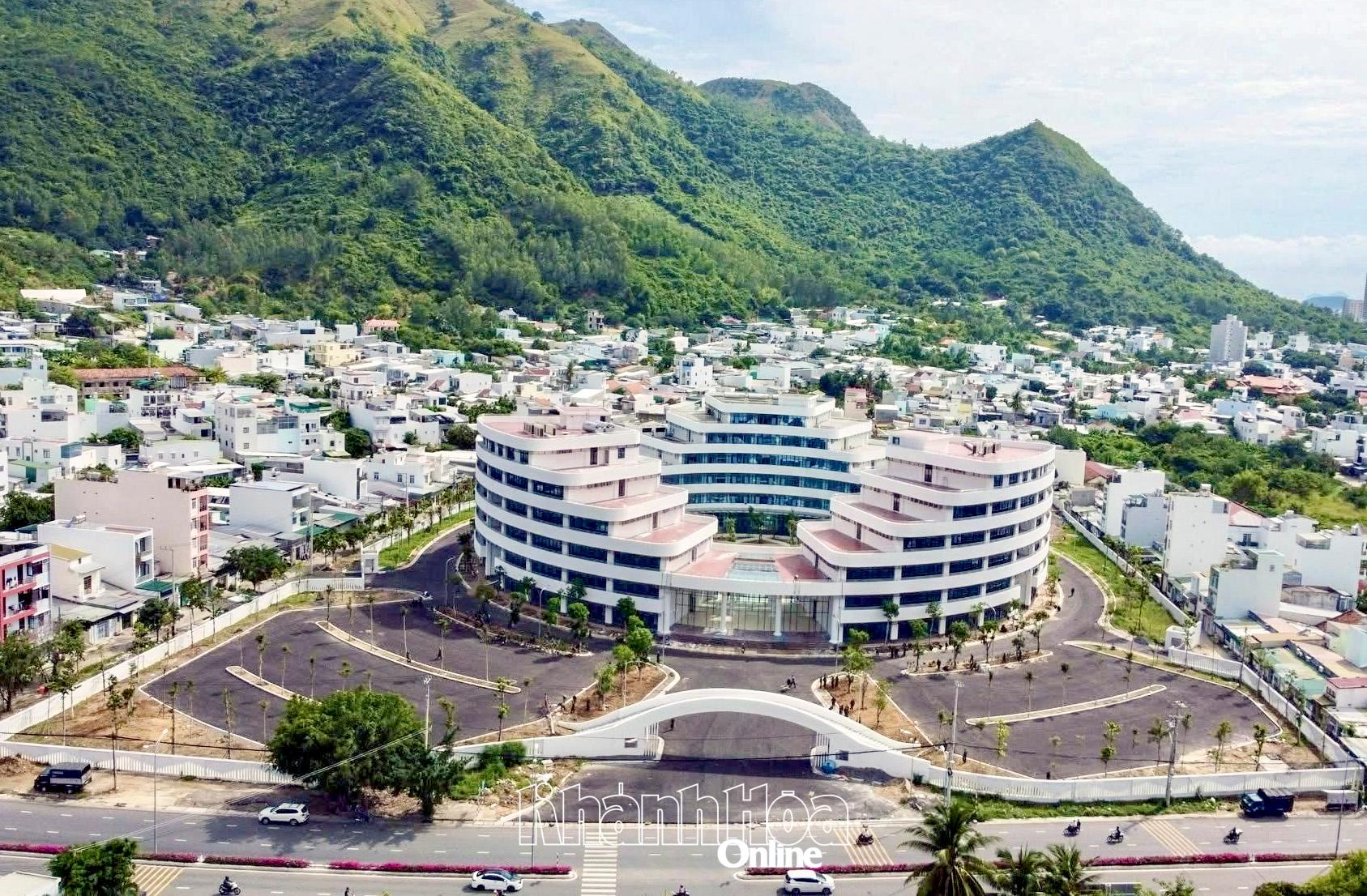 |
| The Army Software Park (ASP) will be a key advantage in advancing Khanh Hoa’s digital infrastructure. |
Stimulus from digital infrastructure planning
According to Dao Xuan Ky, Deputy Director of the Department of Science and Technology, data has become a strategic resource alongside AI, cloud computing, big data, and computing power. A centralized, shared, and resilient digital infrastructure in Khanh Hoa will not only meet data storage needs but also provide cloud computing resources for government agencies and businesses.
From an economic development perspective, a modern data center can become a catalyst for attracting technology firms, startups, and skilled talent. It will help Khanh Hoa accelerate the growth of its digital economy while complementing key sectors such as tourism and the marine economy.
Especially, Khanh Hoa Province possesses unique competitive advantages in the South Central Coast region. As a strategic gateway linking the South Central Coastal region, the Central Highlands, and international markets, the province is well positioned to support the deployment of international submarine fiber-optic cables and high-speed digital infrastructure.
Vice-Chairman of the Provincial People’s Committee Le Huyen emphasized that the Departments of Construction, Agriculture and Environment, together with local authorities, should review land use and environmental planning requirements while streamlining administrative procedures. He reaffirmed Khanh Hoa’s commitment to accompanying businesses, fostering a transparent and investor-friendly environment, and ensuring favorable conditions for efficient and sustainable investment.
Another key advantage is energy. As new-generation data centers, especially AI-driven ones, require massive electricity consumption and a highly reliable power supply, Khanh Hoa is well positioned to meet these demands. With more than 6,000 MW of installed capacity from 72 operational projects, mostly led by solar and wind power, the province can provide the clean and sustainable energy needed for green digital infrastructure.
PhD. Pham Ngoc Minh, from the Institute of Information Technology under the Vietnam Academy of Science and Technology, noted that Khanh Hoa has strong potential to emerge as a new data infrastructure hub, helping connect and share the load currently concentrated in Hanoi and Ho Chi Minh City. He added that the “Khanh Hoa Green AI & Data Hub” model, built on 5 pillars: green data centers, AI/GPU and high-performance computing (HPC), sovereign cloud services, big data, and data security and redundancy, will create a comprehensive foundation for digital innovation and growth.
Furthermore, the investment support policy adopted by the Provincial People’s Council, which offers incentives of up to VND 200 billion per project for semiconductor manufacturing, key technology products, and AI data centers, underscores Khanh Hoa’s strong commitment to attracting high-tech investment and fostering innovation-driven growth.
 |
| Le Huyen, Vice-Chairman of the Provincial People's Committee, discusses digital infrastructure development with technology experts and enterprises. |
Gradually forming a digital technology ecosystem
Technology experts recommend that Khanh Hoa with these advantages, develop a multi-purpose data center and a centralized digital technology zone as part of an integrated ecosystem, rather than focusing solely on standalone facilities. The model should be built on close collaboration among government, academia, and businesses. While the government provides support through planning, land allocation, power supply, digital infrastructure, and investment policies, businesses would lead investment and operations, and research institutions and universities would contribute through innovation, technology transfer, and workforce development.
MA. Architect Nguyen Thi Thu Trang, Deputy Director of the Vietnam Industrial and Urban Construction Consultancy Company, said Khanh Hoa’s advantage lies in combining the sea, ports, tourism, urban development, data, and AI into an ecosystem. She therefore urged the province to establish a centralized digital technology zone with adequate power and water supply, strong fiber-optic networks, sustainable land resources, and resilient infrastructure.
PhD. Trinh Quang Viet of the Institute of Artificial Intelligence Applications, under the Vietnam National University Ho Chi Minh City Innovation Center, proposed that Khanh Hoa’s centralized digital technology zone be developed around a 4-tier ecosystem. The model includes green infrastructure such as AI data centers, clean energy, and connectivity; shared digital platforms that reduce technology investment costs for businesses; research and training facilities for talent development; and a vibrant innovation ecosystem supporting enterprises, startups, and AI applications in key sectors including tourism, the marine economy, energy, agriculture, and fisheries.
The multi-purpose data center and centralized digital technology zone in Khanh Hoa will be developed in 3 phases through 2035. The 2026–2027 phase focuses on planning and site preparation; 2027–2029 on core infrastructure development and initial operations; and 2029–2035 on expansion and completion of the digital ecosystem.
To accelerate progress in digital infrastructure development, Vice-Chairman of the Provincial People’s Committee Le Huyen assigned specific responsibilities to relevant agencies at the “Connecting Enterprises and Promoting Investment in Multi-purpose Data Centers and Concentrated Digital Technology Zones 2026” forum.
The Department of Science and Technology was tasked with leading investment facilitation efforts, expediting proposals, and developing the List of projects for attracting investment in digital infrastructure. Other responsibilities related to land allocation, 5G infrastructure, power supply, investment incentives, and investor support to ensure timely and coordinated project implementation were also assigned to specific departments and agencies.
D.L-L.A
Translated by N.T





Thông tin bạn đọc
Đóng Lưu thông tin