The Department of Science, Technology and Information, the Ministry of Education and Training and the For Green Future Foundation (Vingroup) have officially announced the project “Together Building Green Schools” to promote green lifestyles and environmental awareness in schools.
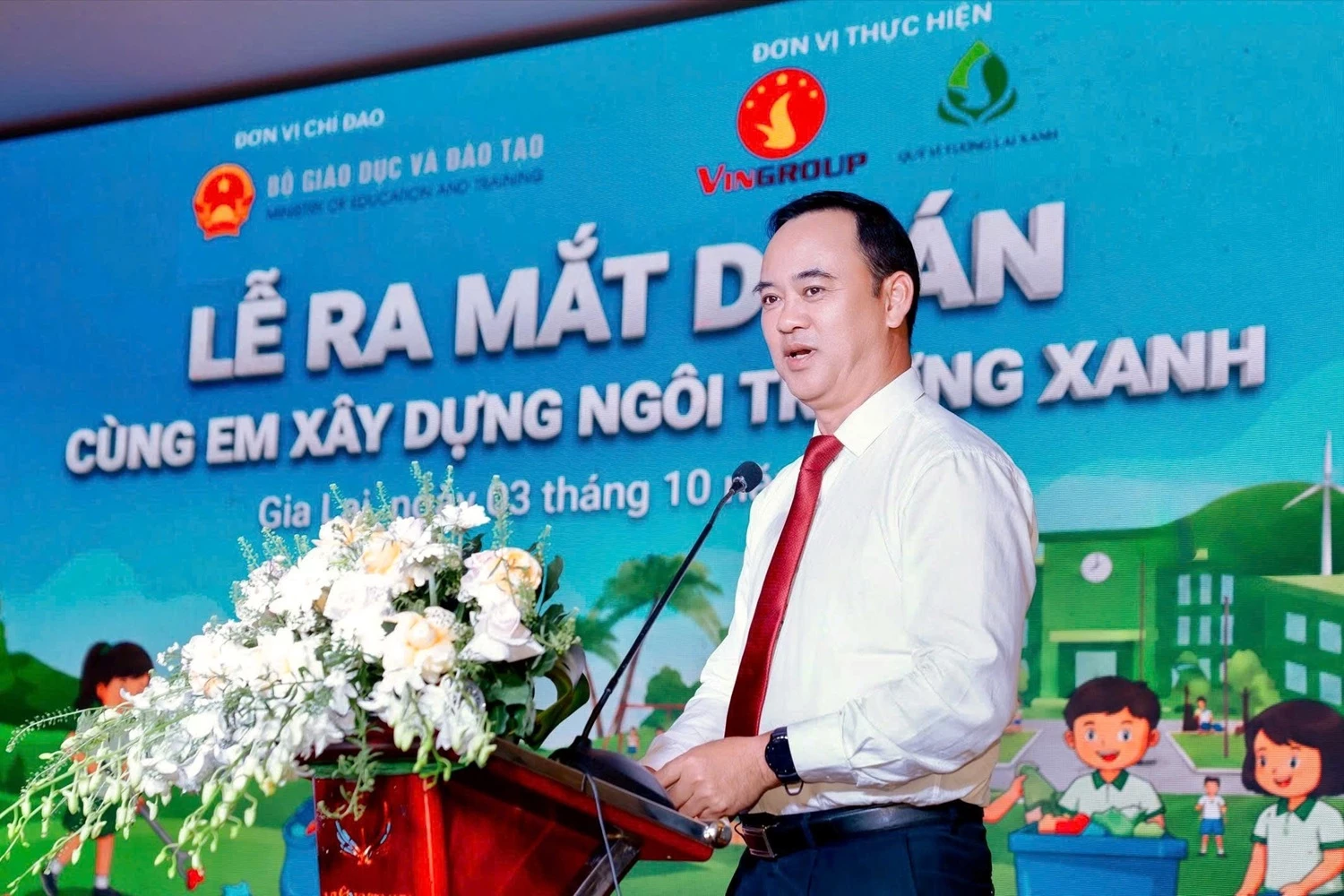 |
| PhD. Tran Nam Tu, Deputy Director of the Department of Science, Technology and Information (Ministry of Education and Training), speaks at the launch event for the “Together Building Green Schools” project. |
The project is being implemented under the cooperation agreement for the "Green Education, Green Sports" program (2023–2028), signed on October 6, 2023, between the Ministry of Education and Training and the "For Green Future" Foundation (Vingroup). Within this framework, the “Together Building Green Schools” project serves as a key component of the program. The initiative is led by the Ministry of Education and Training's Department of Science, Technology and Information, which works closely with the "For Green Future" Foundation to oversee the implementation and facilitate collaboration with educational institutions throughout the 2024–2028 period.
From green education to behavioral change
The “Together Building Green Schools” initiative aims to promote environmentally friendly behaviors through training and environmental activities in schools. Reaching 200 schools nationwide, it seeks to foster a green mindset and sustainable lifestyle among administrators, teachers, and students.
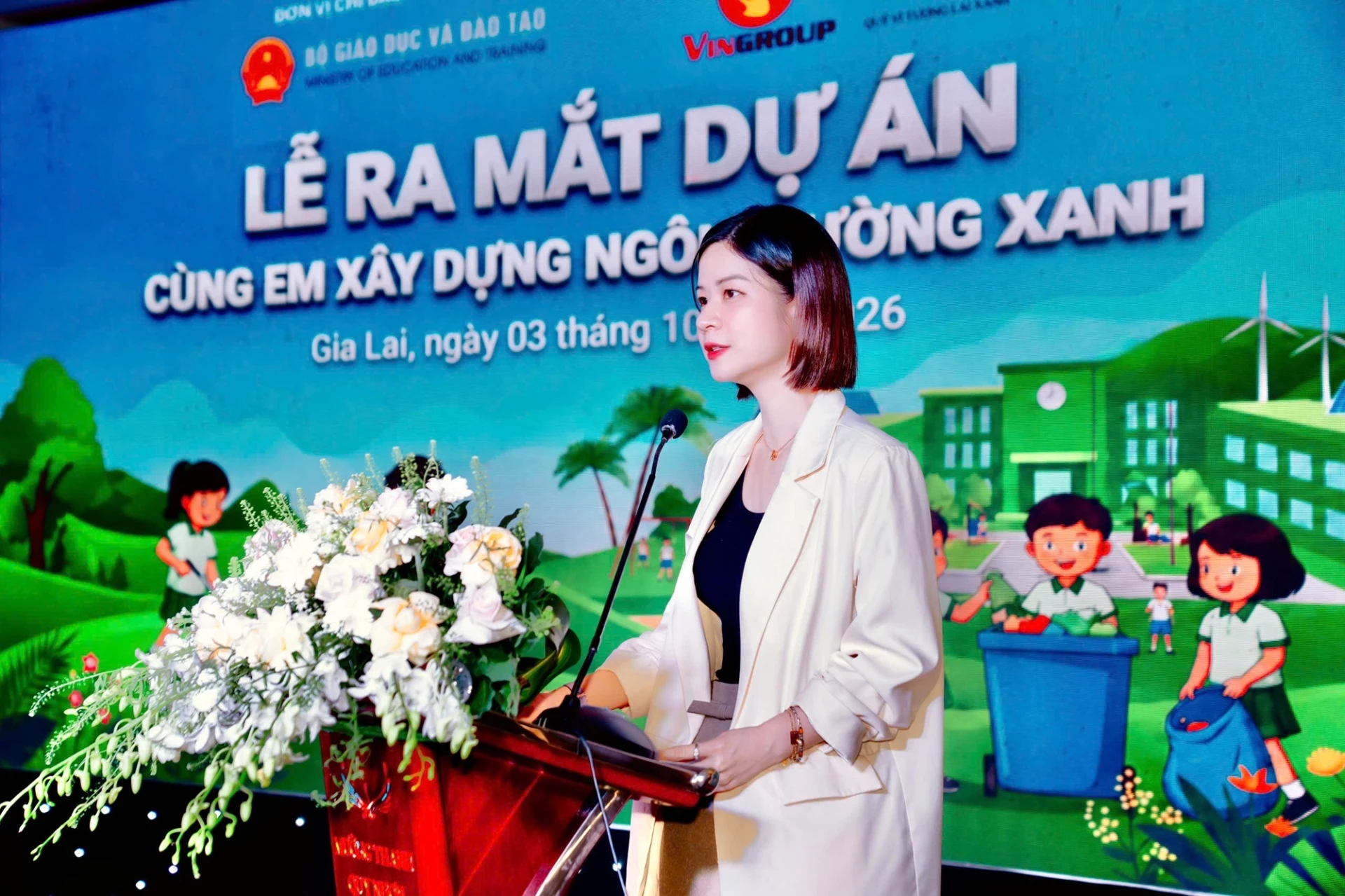 |
| PhD. Le Thai Ha, CEO of the For Green Future Foundation (Vingroup), said the project aims to develop a measurable and replicable model by 2028, embedding green lifestyles in schools. |
The project focuses on developing a “Green School” model and a corresponding set of assessment indicators that translate environmental education goals into practical criteria and actions for schools. Based on the 7R framework (*), these tools promote waste reduction, reuse, and recycling while encouraging greener mindsets and practices in learning, daily activities, and school management. The 7R framework includes Reduce, Reuse, Recycle, Refuse, Rethink, Repair, and Replace to promote sustainable and environmentally friendly practices.
From building the foundation to implementation in schools
To ensure the model aligns with educational realities, the project’s initial phase focuses on research, surveys, and the development of professional tools before scaling up implementation. In 2025, the project conducted field surveys at 12 educational institutions across 6 provinces and cities to assess facilities and environmental education needs. Based on the findings, it developed two key tools: a “Green School” assessment index and a set of criteria for selecting participating schools.
Concurrently, 3 consultation workshops were held in Hanoi, Hai Phong, and Ho Chi Minh City, engaging around 100 administrators, teachers, and education experts. Feedback from participants helped refine the criteria, ensuring their applicability across schools with diverse socio-economic contexts and facilities.
In 2026, the project has moved from foundation building to development and implementation. Two training material packages on the 7R framework and the Green School model will be finalized, providing environmental knowledge, green living skills, and guidance for organizing awareness and training activities, as well as supporting schools in developing their own implementation plans.
The first training sessions have reached around 60 junior high schools in Northern Vietnam. In Ninh Binh, 115 administrators, teachers, and Young Pioneer leaders participated, with post-training assessments showing a 36% increase in awareness scores. In Lang Son, 112 participants attended, and awareness of the 7R framework and environmental education increased by 43.5%.
Notably, in Lang Son, 100% of participants met the post-training assessment requirements, demonstrating their ability to integrate the 7R framework into teaching activities, apply AI and digital technologies to environmental communication, and develop Green School action plans for their schools.
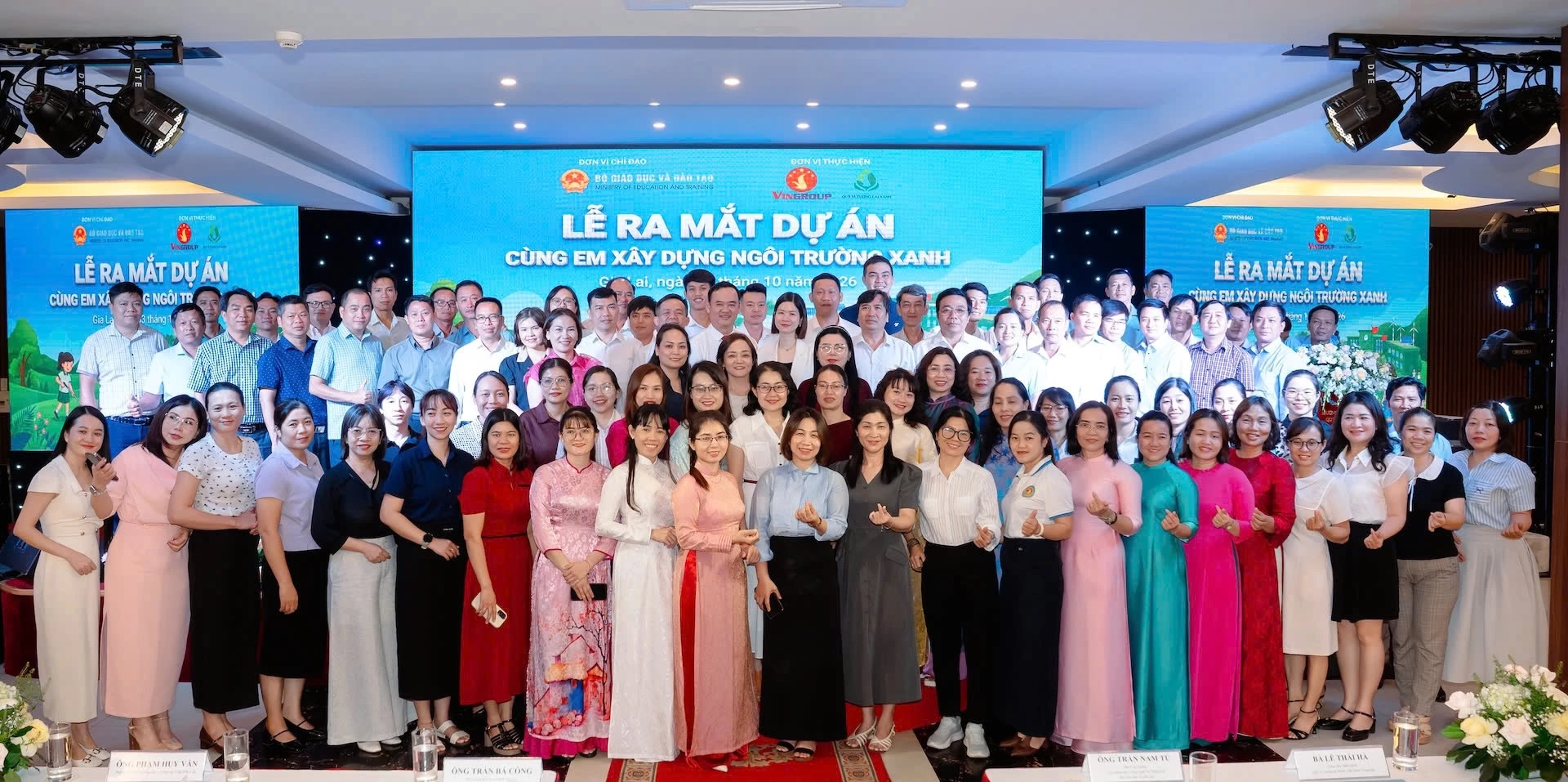 |
| Representatives from various schools attend the project launch event. The project aims to attract 200 schools nationwide to join the green school network. |
Towards a nationwide network of green schools
In the subsequent phase in 2026, the project aims to complete training programs in the Central and Southern regions, expanding its reach to 95 schools in 19 provinces and cities. Following the training, pilot schools will implement campaigns, competitions, and "Green Transformation Days" to turn knowledge into practical actions and visible improvements in the school environment.
In 2027, the project will expand to 12 more provinces and cities, growing the network to 155 schools across 31 provinces and cities, with a target of 200 schools. During 2027-2028, progress will be assessed using the "Green School" indicators to recognize achievements, document best practices, and develop a Green School map. The project will also organize a National Green School Exhibition and support outstanding schools in competing for international environmental awards.
PhD. Tran Nam Tu, Deputy Director of the Department of Science, Technology and Information (Ministry of Education and Training), said: “A key goal of the project is to develop a practical and evidence-based ‘Green School’ model. Implementation results from schools will help refine the model and support the assessment, recognition, and expansion of effective practices across the education system.”
“Through the Building the Green School project, the Ministry of Education and Training and the For Green Future Foundation aim to go beyond transforming each school by fostering green thinking and sustainable lifestyles within the education system. The goal is to embed these values into everyday school life and inspire their spread from students to families and the wider community," PhD. Le Thai Ha, CEO of the For Green Future Foundation, Vingroup, added.
X.T
Translated by N.T





Thông tin bạn đọc
Đóng Lưu thông tin