After 25 years of construction from April 30, 1975 to July 7, 2000, Cam Ranh has much developed from a district and then a town...
After 25 years of construction from April 30, 1975 to July 7, 2000, Cam Ranh has much developed from a district and then a town. Cam Ranh Town officially was recognized to be a city of Khanh Hoa Province on December 23, 2010 under the Government’s resolution No. 65/NQ/CP.
Cam Ranh City has 99 wards and 18 communes with a population of 217,000 and a natural area of 69699 ha. The coastline is 50km and the water surface area for aquaculture is over 1000 ha.
Cam Ranh has rich sea-to-sky potentials.
Land
Cam Ranh Peninsula boasts a great white sand reserve of 500 million tons, containing 97-99,5% of silicic acid; used for producing high-grade crystals and glass.
Phung Hoang Mountain is reflected into the waters, 10m deep, 1000m long and 250m wide with a fresh water reserve of 16,000 m3.
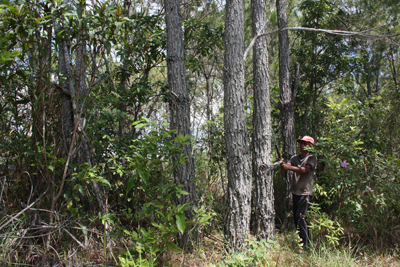
Many rare species of wood can be found such as ebony (Cam Thinh Tay Commune), lagerstroemia speciosa (Hon Rong Ba Ngoi) and wildlife (Nui Chua Cam Lap National Park)
The cultivation area is over 8000 ha with over 6,000 ha of annual trees. Many big companies and plants located in Cam Ranh include Oshima Shipyard, Cong Thanh Cement Grinding Station, Cam Ranh Shipyard, Global Sea - Product Company and so on.
Besides, there are over 50 scenic sites and historical vestiges in Cam Linh, Cam Thinh Dong, Cam Lap, Binh Ba Island, etc.
Sea
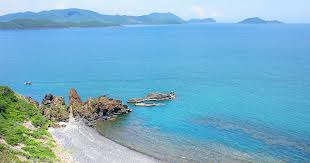
Cam Ranh Bay is recognized to be one of the best 3 natural bays in the world. The other two are San Fransisco (USA) and Rio de Janciro (Brazil). Cam Ranh Bay meets basic requirements related to width, depth and being well-shielded. The bay is large and narrow enough for high capacity vessels to call at.
Binh Ba Island is formed by two mounts called Hon Go, 100m high, and Hon Du, 200m high making two estuaries: the large one, to the south, 3.5km wide and the smaller, to the north, 250m wide.
Cam Ranh also has another small bay connecting to Thuy Trieu Swamp, 10km long and over 3km wide.
Ba Ngoi Port has become an international container port which can handle vessels up to 30,000 tons. There is a pier bringing people from the mainland to Binh Ba Island, Cam Lap Peninsula, etc. Local and international seafood processing companies have been operating well in Cam Ranh.
Sky
Nha Trang Airport was moved to Cam Ranh on May 19, 2004 and then upgraded into an international airport on December 12, 2009 with a capital of VND300 billion. Cam Ranh Airport, 750 ha, has a 3km-long and 45m-wide runway.
Cam Ranh Airport is the nation’s leading airport in terms of area and ranks fourth in terms of passenger output.
With over 1 million arrivals in 2012 alone, Cam Ranh Airport is expected to receive 2 million domestic and international travelers by 2020.
Cam Ranh has favorable transportation conditions for all-round development, especially in tourism.
N.T